
Filtering Other People’s Judgment: Part 2

The one about judging who is a qualified judge.
We carry around a courtroom full of judges and jurors in our heads. For better or worse, our fancy monkey brains have the ability—and strong propensity—to think about what other people think of us.
And, of course, we’d strongly prefer that the thoughts about us in other monkeys’ heads be favorable. But should we always try to win everyone’s approval? Obviously not. So, when should we strive for it? And whose judgments should we even care about? Not easy questions.
In Part 1 of this series, we explored how we fancy monkeys fixate on what others think of us. And we talked about how we need to develop appropriate filters that let in the helpful judgments and discard the silly, useless ones—starting with the Stuff I Care About Filter.
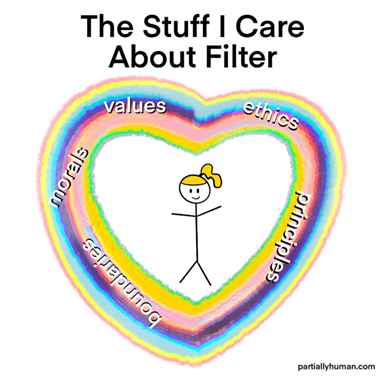
The focus of that filter is what matters to us, which helps us appropriately discount input that doesn’t align with our values. Now we’ll explore a filter that helps determine whose judgments we should care about. I call this the Who the Heck Are You to Tell Me That Filter.
But first, let’s rethink what judgments actually are.
Judgments Are a Form of Advice


Should you take dieting advice from your coworker? Should you take financial advice from your neighbor? Should you take tiger training advice from Mike Tyson? Should you style your hair, buy your house, structure your romantic partnership, raise your kids, choose your career, and adhere to cultural traditions based on society’s advice?
Often, we think of judgments as summary verdicts on what’s right or wrong, good or bad, cool or not cool—almost like a grade; you earn an A when someone approves or an F when they disapprove.


But I like to think of judgments as something more akin to advice on what we “should” or “shouldn’t” do. Most of the “advice” cast our way is people comparing our actions to their expectations—typically the status quo—and reacting to the gap therein. The subsequent approval and disapproval signaled are levers that others pull to influence our behavior.
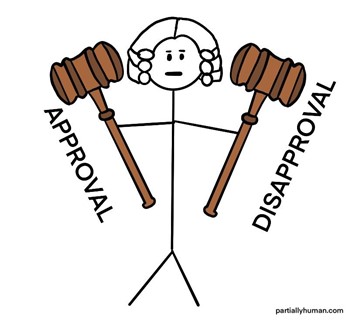
Contained within each judgment is implicit guidance on what we need to do to measure up to some (typically arbitrary) standard. So projecting what other people might think about our actions is really a way of asking for advice, via mind reading. How should I be? What should I do? What’s “normal?” What’s expected? And fundamentally: what makes me cool, worthy, and lovable?
But when are people’s judgments—their implicit advice—worth listening to? Whose advice do you value? In my experience, that filter—the Who the Heck Are You to Tell Me That Filter—is way too loose for most people. This is evident if you spend any time on the internet, where people frequently solicit input from random, unqualified people about anything from misshapen moles, to marital issues, to moth infestations. It’s like they’re stumbling around in the dark hoping some rando happens to have the magic answer to their problems.
Case in point, one Facebook group I’m in is for listeners of a podcast I like, By the Book. The show is about self-help books, so people in the group often ask for book recommendations. So far so good. Somehow, this has spiraled into people asking for advice on anything under the sun, like this one I came across today:
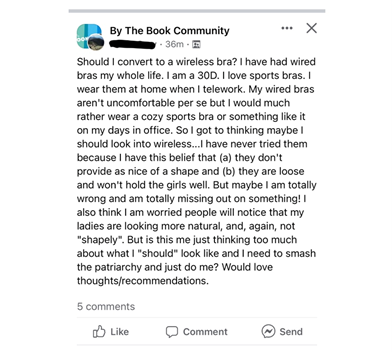
Asking Facebook strangers for advice isn’t any worse than surveying your coworkers, friends, and families (even if that means just thinking about what they would think) on bras, books, and brownie recipes—as if the people in the closest proximity to us happen to be experts on everything important. To be fair, I understand how the wisdom of the crowd will sometimes spawn the right answer. But we can do better than crossing our fingers and hoping that the people we know have all the answers. We can be more methodical. We can have a higher bar for who is qualified to give us advice. We can tighten our filter, raise our standards, and supercharge our thinking, using theory of mind to our advantage.
But what does this have to do with people judging you?
Not Everyone is Qualified to Give You Advice and Not Everyone is Qualified to Judge You
Your advice filter and your judgment filter are interconnected. If you think everyone’s viewpoint merits consideration, you’re letting in way too much junk advice and junk judgments. Not all two cents are created equal. If we can admit that the monkeys in proximity to us don’t have all the answers on how to live life, that loosens the notion that they have all the answers on us too.
Evaluating the qualifications behind someone’s advice is easier than evaluating whether they are qualified to judge you more generally. There are clear levels of expertise in the domains of books, bras, and Bingo. We know that the advice of a bra fitter from a nice lingerie store is better than the advice of someone leaving a review on Yelp. But what about when someone judges YOU? How do you vet their qualifications?
When it comes to the subject of you, other people’s judgments might not be right. Their opinions are just that—opinions. They don’t hold the knowledge or power to deem us worthy or unworthy. They aren’t some supreme, infallible judge. We are not condemned to live a life constrained by their conventions. Their judgments don’t have to hold sway over us.

This is both a frustrating and an exciting realization. Conventions are convenient, freeing us from having to figure things out from scratch ourselves. But conventions are also soul-crushing, boxing us into unnecessarily silly limits.
Repeat this to yourself: other people’s judgments are not commandments. You don’t have to take their advice. You don’t have to feel like you did something wrong because you didn’t meet their expectations. You don’t have to twist yourself into knots to please them. Stop soliciting advice from people who aren’t qualified on that topic and stop listening to the judgments of people who aren’t qualified on you.
Really, Most People Are Seriously Not Qualified to Direct Your Life
A former coworker of mine carried in her wallet a list of names of people whose opinions matter—people who have her best interests at heart. She created that list to help her make decisions after she realized she had almost made an important decision based on the judgments of people who didn’t matter and who didn’t care about what was best for her and her family. She used that list as an anchor, so she wouldn’t be swayed by people with motives not in her interest.
Something to ponder: how many people do you know who truly only want what’s best for you in every situation? No agenda? No ulterior motives? No pettiness? No self-interest? No bias? It’s likely a short list.
I love the idea of using people who care about you as a gut-check, but I think that our loved ones’ opinions come with baggage. Friends and family often have their own agendas and ulterior motives—think of parents who push their kids into careers that don’t suit them and spouses that sabotage their partner’s new diet program.
And, all too often, we aren’t surrounded by great role models. Cultural norms around food are a great example. You can see how harmful norms spread through a group when you look at this U.S. obesity map:
Notice how a block of states from Texas to West Virginia collectively tick up their obesity rates, consistently maintaining higher overall rates compared to the rest of the country. This is unsurprising if you’ve spent time in the South. Their food culture tends toward more fried foods, heavy cream, and sweetened drinks. Driving through a southern state recently, I stopped at a gas station to get a drink and could not find a single unsweetened beverage besides plain water. Someone growing up in that environment would look around to see what’s “normal,” to know what’s expected, and conclude that drinking lots of sugary drinks is perfectly fine. The South’s diabetes rates indicate otherwise:
If the culture you live in is physically healthy, financially healthy, emotionally healthy, spiritually healthy, and relationally healthy—then by all means, look around at what everyone else is doing and do that. If it’s not, then do something else. (I know—easier said than done.)
We need some distance from the judgements of our community and even the people we love most. We need to chart a path where we aren’t needlessly flung around by the fickle preferences and poor judgments of society or our loved ones. To do that, we need a mental framework that both allows for us to be decent citizens AND to have freedom to live our best life, not reliant on the fleeting thoughts others have about us. We need to choose our own, qualified, judges.
Flip the Script: Repurposing Theory of Mind
We can’t stop thinking about what other people think of us, but we can lessen the emotional sting of disapproval once we’ve calibrated our filters appropriately. Shifting our theory of mind habits away from being a torture device we use to measure our value toward being a useful tool that informs our thinking is a game changer.
We are living in an unprecedented era of knowledge. We have access to the greatest minds, past and present, at our fingertips. Thanks to the miraculous availability of books, interviews, podcasts, and articles, we can tap into a wider network of experts than our ancestors could even imagine. Thanks to the internet, you have more information available to you than 99% of kings, queens, presidents, dictators, and other permutations of top monkey ever did.
To utilize that knowledge wisely, we have to start by not taking the views of our nearest and dearest so seriously. And we must crowd out the views of those who happen to be in the closest proximity to us with more enlightened views. We do this with the Who the Heck Are You to Tell Me That Filter.
The Who the Heck Are You to Tell Me That Filter
We’ve all heard the phrase, “What would Jesus do?”. This helps some people make moral decisions, but I don’t think it’s a helpful thought experiment for figuring out whether you should co-sleep with your baby, go on the Keto diet, or quit your job to attend art school. I like the general premise though—using our fancy monkey brains to project what someone wise would do if they were us. We can build on that concept.
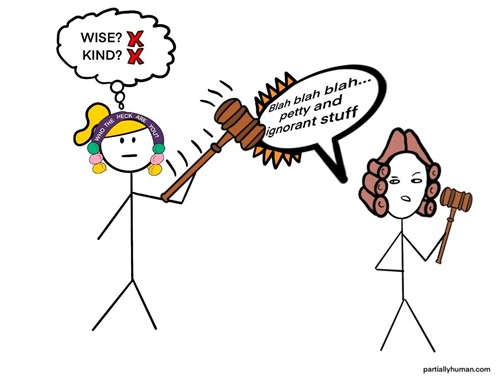
Thanks to theory of mind, we have the magical mental ability to appoint unbiased experts to be the judge and jury in our heads. This is the most rational way to approach the fact that we’ll always be worried about what others think. Designating wise and kind judges acts as a counterweight to the ignorant and unkind judgments (real or perceived) from others on our radar. Here’s how it works.
Who the Heck Are You to Tell Me That
Step 1 – Appoint Your Judges: Think about people who meet the following qualifications:
- Wisdom/Expertise – They have verifiable knowledge, skills, and experience in that domain
- Kindness/Objectivity – They are compassionate and have pure motives (it’s also okay to pretend that someone who is normally a butthole, but is an expert in something, can temporarily grow their heart like The Grinch and lovingly give you their opinion)
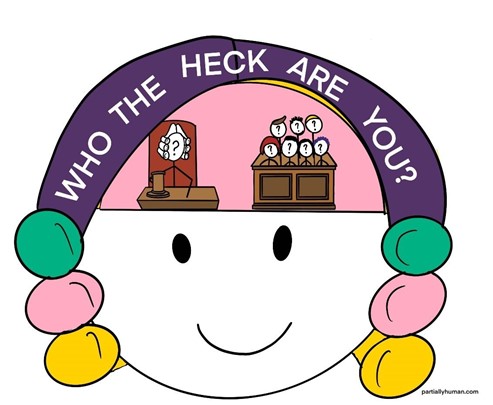
Step 2 – Use Theory of Mind to Get Their Wise Counsel: When a situation relevant to their expertise pops up, imagine what they would say about it.

Step 3 – Use Your Filter to Bar Unqualified Judgments: If someone who doesn’t meet the above qualifications lobs a judgment your way, smash it away with your filter.
That’s it! It’s a quick heuristic that helps you sort the wise choice from the nonsense. The key underlying assumptions are that:
A) They know all the relevant information (or at least know as much as you do).
B) They want what’s best for you.
If someone judging you fails to meet one of those criteria, their view should be automatically disqualified (or at least heavily discounted). One or both of those things is usually missing when we’re stressed about what someone else thinks.
For example: What if someone tells you to wipe the smile off your face when you win bingo? Should you take their advice? Should you trust their judgment? Let’s see whether they meet the prerequisite criteria for having a relevant opinion.
- Do they know the same information that you do? Yes.
- Are they a bingo winning expert with extensive knowledge on post-winning-etiquette? Nope.
- Do they care about you and want you to live your best life? Nope.
Well what do you know? They are disqualified. Their two cents do not make it through the Who the Heck Are You to Tell Me That Filter.

Someone qualified to weigh in on your BINGO win would high-five you. They would take joy in your success. They would relish the smile on your face.
How often do you bend over backwards to avoid criticism from people who don’t have all the relevant information, don’t know what they’re talking about, and don’t care about what’s best for you? Let’s look at an example of how consulting your internal expert judge is a more useful strategy than deferring to what the cools kids think.
The Judges in Action
Take money, for example. Unqualified judgments run rampant in the personal finance arena. And what wins approval from others related to how we spend our money is usually not aligned with what is best for us or our deepest values. This is a potent combination for bad decisions.
When it comes to money, people will generally be impressed if you appear wealthy and not be impressed if you appear poor. So judgments about where you appear to land on the socioeconomic ladder effortlessly infiltrate your brain when trying to ascertain what other people think of you. How should these judgments shape our behavior?
Let’s look at whether people’s judgments—de facto advice—and actual advice meet the criteria I laid out for our Who the Heck Are You to Tell Me That Filter.
Imagine you want to start saving for retirement and are considering spending less money on clothes, presents, eating out, and vacations to do so. What will other people think? And should that matter?
Criteria 1: Wisdom/Expertise
Do other people have all the relevant information about your specific financial situation? Almost never. People keep their financial situations buttoned up tight; it’s taboo to talk about how much money you make. And friends rarely divulge their saving rates or debt levels to each other. So if someone tells you to invest in bitcoin or buy a house or use a particular budgeting system, they have no idea whether that’s what’s right for you. And if they encourage you to splurge on a vacation “you only live once!” or proclaim that you’re depriving yourself by not eating out “loosen up, have fun!”, then they are giving you this advice without appreciating all the facts. Their opinions on how you spend your money do not meet the Wisdom/Expertise qualification.


Okay, but maybe the people around you know what they’re doing with money? Maybe they know more than you do? Doubtful. You don’t know other people’s financial situations, so it’s easy to see what they’re doing and assume that their decisions are fine, and maybe you should follow suit. You might think that if someone with a similar income can afford a truck and a lavish vacation and tons of Christmas presents for their kids, then you must be able to afford them too. This is a bananas way to make financial decisions, and I’ll show you why.
I used to be a bank teller, and it was an eye-opening experience. People in head-to-toe designer clothes, living in giant houses, driving luxury cars, would carry huge balances on their credits cards, make minimum payments, and shuffle debt around with new cards and balance transfers. These people were broke. I’m sure the people around them didn’t know that though. Only the bank could see that all their money was going to eating out, shopping, beauty treatments, and interest payments—all the trappings of “success,” and none of it was set aside to build wealth.
Alternatively, there were some people who came into the bank that looked like low-income riffraff—outdated clothes, dirt under their fingernails, old beat-up cars—and these people were loaded. I was shocked at how wealthy they were; they didn’t fit my image of a millionaire. It turns out that most millionaires fly under the radar. They amass their wealth precisely BECAUSE they don’t spend “like a rich person.” (The book The Millionaire Next Door does a great job demonstrating how our idea of what a rich person looks like is mistaken.)
I actually think we would all be better off if we knew each other’s financial details more intimately. Because as it stands, in order to impress people and demonstrate how well off we are, we have to spend money on a bunch of stuff, leaving us ultimately moneyless. Ironic, right? Our incentives would shift dramatically if we could impress people with our savings rate and 401K savvy. Imagine if everyone knew how much they were putting in their 401K each month. Do you think this would motivate them to save more? But obviously the point of this article is to move away from worrying about what people think, so I digress.
So should you feel bad saying no to a friend who wants you to go on a trip that is outside your budget? Nope. Should you feel bad if your kids think they should get unlimited expensive presents like their friends do? Nope. Should you feel bad for not having fancy clothes and high-status stuff? Nope. And nope.
So are other people’s judgments about how you spend your money relevant? You already know the answer—NOPE. Disqualified.
Most people are not personal finance experts. Therefore, their opinions must be filtered accordingly. The only people with the expertise to credibly assess how you spend your money are certified financial advisers. Everyone else can kick rocks. But even then, not just any financial adviser qualifies.
Criteria 2: Kindness/Objectivity
Lots of people don’t want what’s best for you. Heck, we’re lucky if they’re just indifferent toward you. Even people who love you don’t necessarily have your best interests at heart—sometimes especially not them. Friends, family, and romantic partners have their own agenda for how they want you to be. This is a tough pill to swallow. It’s not that your loved ones are bad people, it’s just that they have their own baggage and insecurities.
People are usually surprised when they go on a diet and the people closest to them seem to be trying to sabotage them. (They are.) Articles like If you want to lose weight, don’t tell your friends make me sad, but don’t surprise me at all. Food and finances are similarly contentious domains, rife with judgment. They touch on people’s values, identities, and cultures—things people will fight to defend. We need to separate ourselves from the silly, nonsense judgments of others, including those we love.
When you try to improve something about yourself, other people often feel threatened and try to resist your efforts. It blows my mind how much flack I get from people for ordering a salad or turning down dessert. They react as if my life is devoid of fun and happiness because I’m putting lettuce in my mouth. (Read my post Food Won’t Make You Happy for my counterarguments to this mindset.)
People (yes, including you and me) can feel threatened when we judge that other people are doing better than us. Someone else’s virtue and success pokes at our insecurities and stokes our envy. This state of mind muddies our motives—making it hard for us to want only good things for others. When our identity is at stake, sometimes we would rather see other people make bad decisions so we can feel good about ourselves. Humans are not as evolved as we like to think—we are all just fancy monkeys wearing pants, with dark and primitive urges lurking beneath a sophisticated façade.
When faced with a loved one improving something that we should probably improve ourselves too, it can feel icky. To resolve this uncomfortable feeling—cognitive dissonance—we either need to make difficult changes, or we need to be reassured that what we’re already doing is fine. The other person giving up their goals allows us to take the easier path, giving us reassurance that we are dandy and don’t need to make changes. So here, why don’t you enjoy this donut I picked up for you? It’s your favorite.
Back to our finance example, where you are planning for retirement. If the people around you aren’t doing a good job planning for retirement, they’ll discourage your efforts. They’ll say, “Who the heck can save when dealing with student loans and housing prices and inflation and yada yada yada?” They’ll tell you that saving a nice nest egg is out of reach for all but the fancy rich elite. These narratives make them feel better about their own lackluster financial situation. Their motives are sullied. Disqualified!

What about a financial “expert”? Should you listen to them? It’s all about motives, motives, motives. I’m sure you know enough to know you can’t trust any random person selling you stocks, annuities, cryptocurrency, NFTs, or whatever the current hot financial “asset” is. But most people don’t realize that even very fancy financial advisors from well known companies have ludicrous fee structures that rips you off and leaves you with a suboptimal investment strategy. You have to ask them how they make money; you have to make sure that their incentives are aligned with yours.
Too many people in the finance arena do not have your best interests at heart; the only thing on their agenda is profits. So only a small percentage of “experts” are reputable. Typically, it’s people offering boring advice about 401Ks and tax loss harvesting and budgeting, people not trying to sell you anything (beyond a one-time book/course/consult purchase), that you can be fairly certain you can trust. (More on choosing a financial adviser here.)
Who Does Not Meet the Kindness/Objectivity Criteria?
- Anyone trying to sell you something
- News/media outlets
- Advertisements
- Politicians
- Most random internet strangers
- People who have poor boundaries themselves
- People with underused/underdeveloped empathy, compassion, or kindness
- People who don’t care about what happens to you
- People who are passionate about some cause/issue/belief and want to mind-control everyone around them to get them to agree with them and care about it too
- People who feel bad about themselves and want to knock other people down a peg to make themselves feel better
- People who can’t separate their thoughts/opinions from The Truth
- Kind, loving people who are emotionally triggered and in the primitive mind state we all go to in our worst moments
Wow. That’s a lot of people. Technically, that list includes everyone on the planet just based on the last bullet. The net result of using the Who the Heck Are You to Tell Me That Filter is that most people don’t make the cut most of the time, and that even amazing, highly qualified people have their moments where we shouldn’t listen to them.
As I’m sure you’ve guessed, the hardest part of this filtering technique is finding qualified judges
Creating Your Qualified Judge Pool
It takes some effort to figure out who would be a good judge for you. You won’t find one person who is qualified in all situations, so I think it’s best to develop a cadre of judges that can weigh in on different domains of life—finances, health, career, relationships, parenting, morality, etc. And it’s helpful to have ones with different views, because the point of this isn’t to shut off your brain and defer to people you think are smarter than you. The point is to bring in the perspective of people more wise and objective on the particulars of your life than you are—a reasonable jury with no agenda beyond helping you get to the best possible answer—and bouncing your ideas off of them, rather than preoccupying yourself worrying about what your judgy aunt will say.
I’ll give you a few examples of how I do this, but I’m not suggesting that you use my specific people or my particular values. It’s better for you to find individuals and parameters that resonate with you.
Example: Financial Judges
Most people emulate their parents’ approach to money or do what they think their peers are doing. We’ve already explored why this is a suboptimal approach—your peers most likely do not have their shit together financially, according to every study on people’s financial habits. I didn’t get my financial life in order until I found financial role models that resonated with me.
I needed an expert in my head who was financially savvy without being a tightwad. Someone who had a decent financial plan who didn’t obsess about coupons and budgeting down to the dollar. Someone not too spendy and not too cheap. To get to this well-rounded, financially literate person, I have a composite in my head of three people:
Mr. Money Mustache – To help me figure out how to maximize happiness while minimizing spending.
Ric Edelman – To help me with the nuts and bolts saving/investments/insurance/401K type stuff.
Ramit Sethi – To help me understand the irrational stuff driving my spending habits and to help me be intentional about using money to live a satisfying life.

An example money issue I would run by them: what should I do with a windfall of money, like a year-end bonus or tax refund? I know that Mr. Money Mustache, Ric, and Ramit can be counted on as a mental sounding board because they meet the Who the Heck Are You to Tell Me That Filter criteria:
A. They are money experts
B. They want me to have the best financial situation possible
Instead of surveying my coworkers about how they are using the extra money (spend it!!!) or asking my parents what I should do (save it!!!), I can consult these three gentlemen and land on an answer that’s right for me.
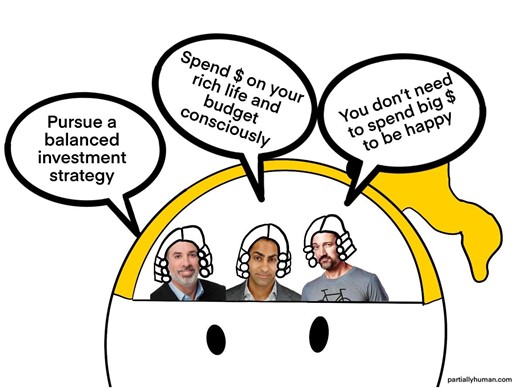
Filtering out unqualified judgments makes it easy(er) to make a decision that aligns with my values and takes into account the wisdom of experts. Thinking about what Ric, Ramit, and Mr. Money would think, I can see that my life can be happy without spending much money, but there are certain categories of spending that enhance my life more than others (for me personally, that is spending on events and experiences). And they also remind me that investing my money in a balanced, diversified portfolio puts my money to work for me and will set me up for financial freedom. To win their approval—and more importantly: my own—I might spend some of a windfall on going to a music festival and then invest the rest.
Other Examples
I have hundreds of mental role models I run my decisions by, to keep me from being too heavily influenced by society’s mercurial conventions. I’ve mostly found these people through listening to podcasts and reading non-fiction. I’ll share a few more quick examples.
Romantic Relationships – Esther Perel, Marshal B. Rosenburg from Nonviolent Communication, Terry Real, and the Gottman’s.
Mindfulness/Spirituality – Sam Harris and Joseph Goldstein
Health – John Berardi and Precision Nutrition, Mark’s Daily Apple, Darya Rose, and Peter Attia
You get the idea.
Build Your Judge Pool
The bottom line is that you are designed to care about what other people think. And since it’s inevitable, why not be intentional about whose opinions you use as a measuring device? Why not level-up your decision-making by using wise and kind judges?
Give it a try.
EXPERIMENT: The Who the Heck Are You to Tell Me That Filter

In this experiment we’ll put into practice the concepts we explored in this post.
STEP 1: PAY ATTENTION
Notice when a (real or perceived) judgment is lobbed your way.
STEP 2: GET CURIOUS
Run that judgment through the Who the Heck Are You to Tell Me That Filter, determining whether the judger is qualified to pass judgments. Do they meet the following criteria?
Wisdom/Expertise – They have verifiable knowledge, skills, and experience in that domain.
Kindness/Objectivity – They are compassionate, have pure motives, and want what’s best for you.
If they don’t pass those two tests, then you can filter out their view appropriately. Voilà! If they do meet the above criteria, then you can consider their judgments as you would any well-intended advice.
And then take it to the next level.
STEP 3: GET CREATIVE
Create your own pool of super-qualified judges. Find experts you respect from different fields and mentally run your ideas by them. Conjure up anyone you want to be your personal mentor! I’m talking Oprah, Tim Ferris, the Dalai Lama, Albert Einstein, Mr. Rogers, Brené Brown, Doug the Pug—anyone you want! Heck, you could even go with fictional characters like Leslie Knope from Parks and Recreation or Ted Lasso. Any figure that embodies wisdom, judgment, and kindness is fair game. And then let those voices be a counterbalance to the less kind, less wise input we often face.
HINT: All of this is a shortcut to tapping into your own compassion and wisdom. My hope for you is that you cultivate a way of relating to yourself that is kind, caring, and objective. And I hope we all can learn to override the painful propensity we have to agonize over the capricious thought bubbles we imagine over other people’s heads.
Best of luck to you, my fellow fancy monkey!

Comments