
Filtering Other People’s Judgment: Part 1

The one about seeking approval and grappling with what to care about.
One time, in 2nd grade, I won bingo. For my prize, I selected a Halloween-themed sweatshirt. As I made my way back to my seat, grinning uncontrollably, an intimidating 4th grader with giant braids poking out of her head in all directions sneered at me, “Wipe that smile off your face.” she said. I immediately felt embarrassed and ashamed, like I had done something wrong.

I inferred from that 4th grader’s judgment of my behavior that you aren’t supposed to look happy when you win. Ever since that incident, I’ve never been quite sure what to do with my face when I’m victorious.
We bend over backwards to avoid unfavorable judgments, unwittingly allowing others’ views to run our lives. Judgmental thoughts swirl through our heads in a soupy, confusing mixture that influences our actions and decisions, big and small. We can’t stop our own brain from trying to categorize everything and rank order things on a good-to-bad-spectrum. More to the point, we can’t stop other people’s brains from doing the same. Yet we try anyway, striving to never give anyone a reason to judge us negatively. Check out this post from Facebook where someone is overly concerned about judgment (below). It’s written humorously, but the level of detail and intensity leads me to infer that there is a seed of truth to the self-consciousness.


Why are we so concerned about what other people think of us? Why does it hurt so much when someone—even a butthole 4th grader or nosy neighbor—criticizes us? And how do we maintain a reasonable concern for others’ views, without obsessing about their opinions or living inauthentically for the sake of pleasing others? Perhaps more importantly, how should we react when we win bingo?
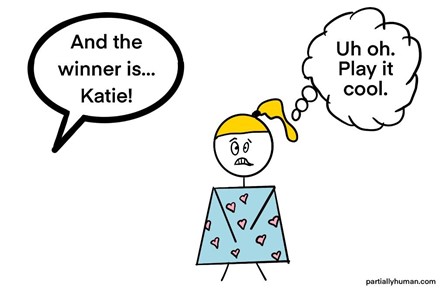
Today’s post examines our obsession with what other people think of us and explores how we can harness that tendency for good. And we’ll look at a mental framework that unbuckles us from the stressful, unwinnable game we play when we are concerned with ensuring any and everyone only has positive thoughts about us at all times.
The first step is to make sure we filter other people’s opinions properly.
Our “Should I Care About This Person’s Opinion?” Filter Starts Out Too Lax


Kids are obsessed with fitting in and are devastated when someone doesn’t like them. But once you get to adulthood, you realize you can’t possibly please everyone. Any adult could have told me that 4th grader was just jealous, and to not let her steal my joy. That was a pretty straight forward situation. But a question that haunts fancy monkeys like us remains: when should we be influenced by what other people think?
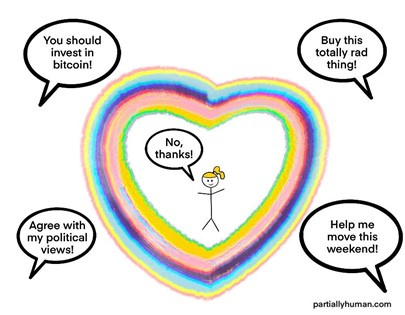
When your filter is too lax (as badly pictured below), your boundaries are excessively blurry and other people’s silly nonsense slips in too easily.
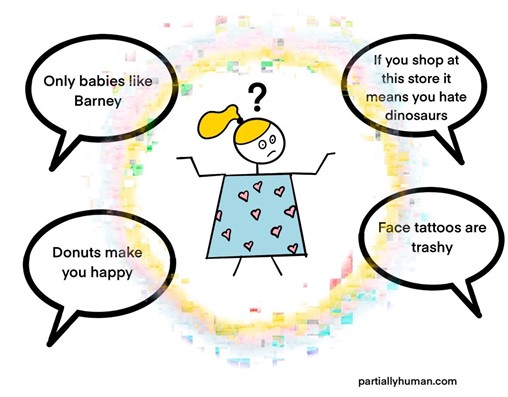
Before you know it, you’re saying, thinking, and doing things that aren’t grounded in first principles, but that are instead based on random thoughts other people have pulled out of their butts. There needs to be tighter discernment.
While we all instinctively weight the value of other people’s input—typically prioritizing what our tribe and loved ones think—most of us haven’t sat down and thought through whether that filter is appropriate. Our default filter leaves us excessively concerned about extraneous opinions. Indeed, it is almost impossible for us to not feel swayed by irrelevant opinions—we fancy monkeys are designed that way! It requires deliberate effort to recalibrate your filter to stop being influenced by opinions that not only don’t matter, but in many cases leave you worse off.
Let’s look at the source of the problem (and—spoiler alert—the solution): theory of mind.
We Are Designed to Think About What Others Think
Theory of mind—the ability to attribute mental states to ourselves and others—is both a gift and a curse for us fancy monkeys. When we developed the ability to think about what other people are thinking, it ushered in a level of communication sophistication unheard of in the animal kingdom. This fancy skill paved the way for complex social interactions, advanced technology, storytelling, culture, and modern civilization…for a price. The ability to know what others think also enables us to know (or worry about) when they think less of us.

As social animals, approval from the tribe is tantamount to survival. And as hierarchical primates, concern about how we stack up in the minds of other monkeys is a reasonable thing to worry about, since esteem and status correlate to better opportunities, better resources, and better well-being. With so much at stake, OF COURSE we are going to spend a significant amount of time thinking about what other people think of us! Tailoring our actions so others like us, historically, is logical and strategic.
I think we all know how this gets us into trouble though: chasing approval is an anxiety-ridden pursuit that leads us to live our lives trying to meet other people’s arbitrary and silly expectations.
Reassuring Note Before We Take a Deep Dive into Judgment
Lots of people freak out about the idea of people judging them. They don’t want to be judged, and they don’t want to be judgmental. Fair enough; it is definitely an ickier aspect of being a human. So if you get stressed out about pondering the state of our judgmental brains, this should make you feel better: no one is really thinking about you. Most people are wrapped up in thinking about themselves. I’d be willing to bet good money that at least 75% of the time that people think they are being judged, they’re not.
In one study that brought this home for me (sorry I couldn’t find the link), researchers added make-up to participants’ faces to make them look disfigured. Then they quickly “fixed the make-up”—secretly removing it—before having participants engage in conversations with people. The participants reported that the people they talked to were staring at the disfigurement and looking at them with disgust. But it was all in their heads! We are constantly projecting our insecurities on to people. What stories might your brain be making up about what’s in other monkey’s heads?
So before assessing someone’s judgment, also consider that the judgment might not exist to begin with. That move alone will cut down on a significant amount of image-management activities and needless fretting!
Okay, back to how we chase approval.
We Are Designed to Seek Approval
My favorite blog, Wait but Why, likens this approval-hungry internal drive to an ancient animal, the Social Survival Mammoth.

The post Taming the Mammoth: Why You Should Stop Caring What Other People Think explains that back when we lived in small tribes, having an over-the-top obsession with what others thought of us increased our chances of survival:
“A tribe meant food and protection in a time when neither was easy to come by. So for your Great2,000 Grandfather, almost nothing in the world was more important than being accepted by his fellow tribe members, especially those in positions of authority. Fitting in with those around him and pleasing those above him meant he could stay in the tribe, and about the worst nightmare he could imagine would be people in the tribe starting to whisper about how annoying or unproductive or weird he was—because if enough people disapproved of him, his ranking within the tribe would drop, and if it got really bad, he’d be kicked out altogether and left for dead.”
The mammoth follows you around—even when others aren’t there—reminding you of societal expectations.


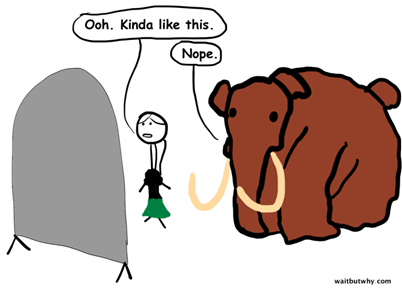
But we no longer live in small tribes that demand conformity to a clearly defined set of norms. We now live in multiple overlapping communities with different, often conflicting, social expectations. And our survival doesn’t depend on everyone liking us. Yet this people-pleasing vestige remains—goading us to read everyone else’s mind and care about the contents of their thoughts—leaving tremendous anxiety, shame, and confusion in its wake.
Our Obsession with What Others Think is Often Irrational and Unproductive
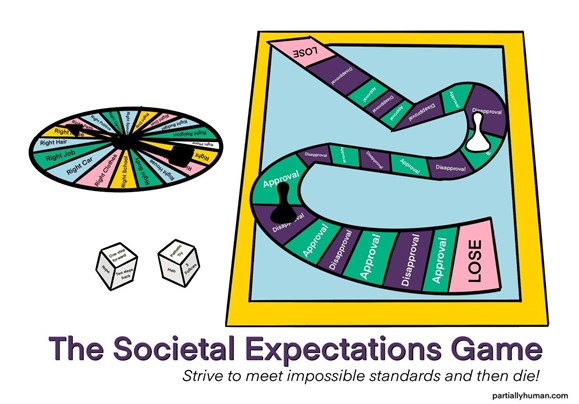
Our fixation on ensuring other people think we’re All The Right Things is exhausting at best and futile at worst. It’s an unwinnable game. I challenge you to find something that everyone agrees is praise-worthy. You can’t do it! One person will be impressed by your Rolex, another will be disgusted that you wasted money on something that just tells you the time. Even when you do something objectively amazing, like winning a chicken breeding competition, there’s someone out there who wants to knock you down because you’re brushing up against their inferiority complex. You can’t win. We know this on some level. And yet, our hunger for approval remains a bottomless pit. The little hits of pleasure we get when we get it “Right”—rocking the Right Clothes and the Right Job and the Right Views—keep us hooked on this unwinnable game.
Think of all the silly things we fancy monkeys do to impress others:
- Buying the second-cheapest wine on the menu so the waiter—who we’ll never see again, whose name we don’t even remember—won’t think we’re cheap or poor for selecting the least expensive one
- Wearing painful, blister-inducing high-heels to go dancing so others will find us sexy
- Social media challenges where we eat Tide Pods, put salt and ice on our skin, or stick metal in an electrical outlet to be cool
- Putting outdated photos of ourselves on our dating profile and/or lying about our height, weight, income, age (as if we won’t be found out within 5 seconds of meeting!) to attract potential mates
- Going into debt spending a buttload of money on a wedding/car/clothes to appear high-status
- Having a different type of cup for every drink—flutes, goblets, tumblers, snifters, highballs, lowballs, hairyballs (okay I made that one up, but you get the point—too many cups hogging space in cabinets, costing money, and collecting dust!)—to impress guests
And does this stuff even have the intended effect? We’ve all heard the quote: “You can be the ripest, juiciest peach in the world, but there’s still going to be somebody who hates peaches.”
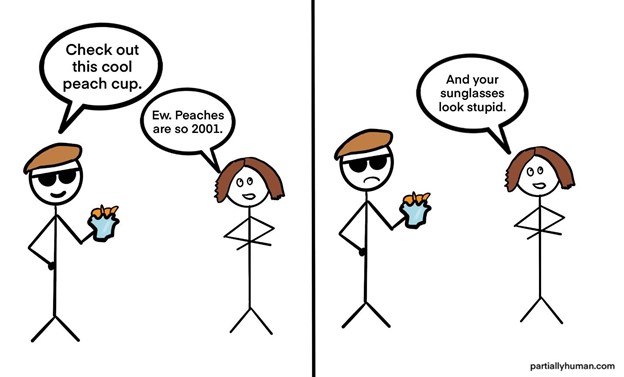
But what if you didn’t even want to be a peach in the first place, and the Keto crew complains about how many carbs you have? That’s the ironic part. We do all these things to impress other people and still come up short. My gosh, just google your favorite celebrity or read the comments of any YouTube video to see how much criticism and hate people direct at conventionally successful, high-status stud muffins. Even Doug the Pug has haters. Doug the Pug!!!

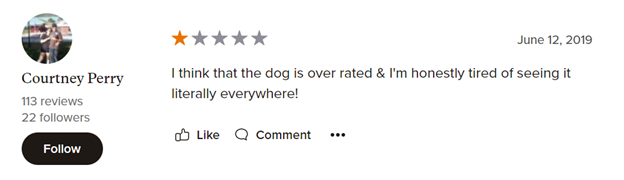
You can’t win!
This is an important insight we all need to reckon with on our path to maturity. There is no pleasing everyone. (Here is a great article that grapples with the contradictory expectations we have of fat people that underscores this point nicely: I’m Done Trying to Be a ‘Perfect’ Fat Person.)
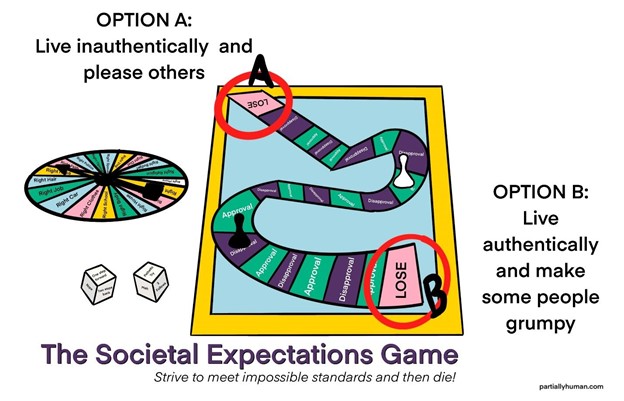
When you realize that you can’t win the Society Expectations Game, you might think, “Why bother? I should just stop caring what people think.”
Should We Just Stop Caring?
Sometimes, when you realize a behavior you’re engaging in doesn’t make sense, you say to yourself, “By golly, I’m just going to cut that nonsense out right this second!” You may be tempted to believe that you can simply stop caring about opinions that don’t matter.
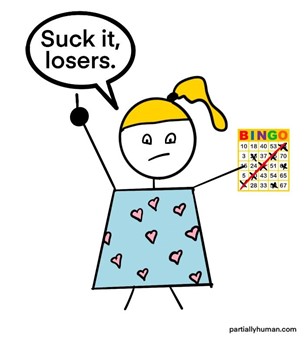
If only it were that easy! We may know intellectually that our judgy neighbor’s opinions about what we wear when taking our puppy out shouldn’t bother us. But we can’t escape our monkey instincts: when faced with the carrot of approval and the stick of judgment, gosh dang, we want that approval. It just feels so good! We slip into people-pleasing behaviors like we’re under a spell, not even realizing what’s happening.
So I think it’s neither feasible nor desirable to stop caring all together.
Our Obsession with What Others Think: Irrational and Unproductive… Yet Necessary
If no one cared what anyone thought of them, society would devolve into chaos, as people flout norms and look out for only themselves. That pinch of icky feelings you experience when you’ve negatively violated someone’s expectation is a reaction you WANT to have. It’s important data alerting you to a social dynamic at play.
Prosocial emotions like guilt, shame, pride, and regret are central to sustaining cooperative relationships. We have to play the Societal Expectations Game, at least a little bit, if we want to find a mate and maintain meaningful employment. Throwing our middle fingers up to society and rejecting any semblance of people pleasing is surely not the path to optimal wellbeing.
Alas, managing our image and reputation is something we fancy monkeys must engage in if we want to flourish. So we still need to be mindful of other’s opinions, to some degree. This is one of those lose-lose situations where both options—caring and not caring—are both kind of sucky. You’re going to deal with some suffering on either path. So it’s more of a pick-your-poison situation than a choose-the-path-that-has-zero-consequences-and-everything-is-always-wonderful situation.
But I Really Don’t Like to Inconvenience or Annoy Other People
I know. Me too.
Here’s the thing though, when you set appropriate boundaries for yourself, you will inevitably inconvenience and annoy other people. There’s no getting around it.
I like Terry Real’s conception of boundaries. He explains that we have both physical boundaries and psychological boundaries that define where we end and where the world begins. The scope of today’s post is obviously psychological boundaries, so let’s look more closely at that one.
Psychological boundaries have two components—containing and protective boundaries.
The containing boundary protects the world from you.
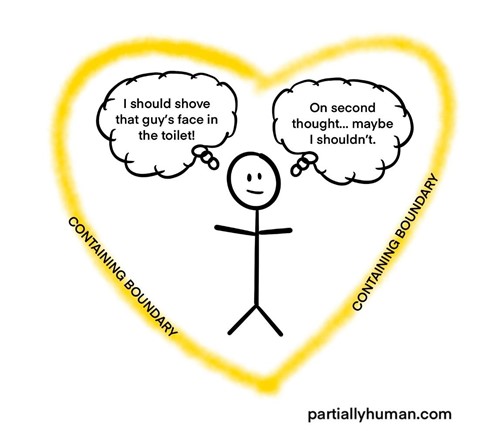
It stops you from saying or doing things you may later regret. It inhibits your baser instincts. It allows you to respect other people’s boundaries. It prevents you from being a butthole.
The protective boundary protects you from the world—this is our filter that rejects harmful input from others.
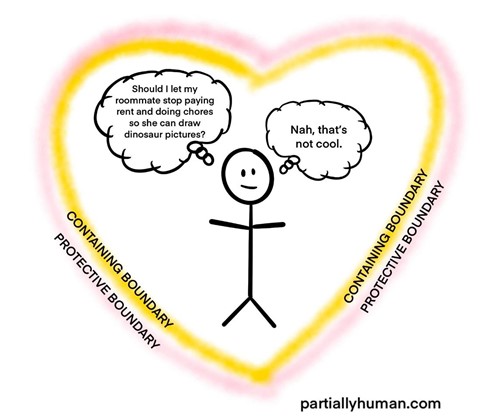
When you have poor protective psychological boundaries, you are in a constant state of emotional vulnerability. It’s easy to hurt you. You get wounded by other people’s thoughts and feelings.
Appropriate protective boundaries prevent you from being harmed when other people are being buttholes.
When you’ve drawn healthy boundaries, you learn to be at peace (at least intellectually) with the fact that other people will chafe against your line in the sand, frustrated that they can’t do whatever they want to you. If someone is grumpy that they can’t push you around, you understand that that’s their problem.
So how do we do that? How does one go about being more discerning about what judgments to let in? How does one sort the helpful input from the harmful? How do we live in alignment with our deepest values while still partaking in civilized society? Let’s look at some filters that will help you do just that.
Sorting Out the Silly from the Substantial
Let’s focus on a couple filters that help sort other people’s input appropriately.
- The Stuff I Care About Filter: Grounding ourselves in our own values and priorities before bending to the desires of others
- The Who the Heck Are You to Tell Me That Filter: Considering the qualifications, expertise, and motives of others
We’ll wrap up Part 1 of this series exploring the Stuff I Care About Filter, then we’ll get into the other one in the next post.
The Stuff I Care About Filter
Clear priorities are the first line of defense against useless judgments; we can’t determine whether or not someone else’s opinion matters if we don’t know what matters to us. Knowing what’s important to you is a buffer against opinions that are just silly nonsense. This is the Stuff I Care About Filter.

Doing this is hard because it’s something we all have to figure out on our own. No one else can tell us what issues we should be passionate about or what values should matter to us. But boy, do they try! And it’s normal to feel guilty for not caring about things you “should” care about, like the environment or remembering people’s birthdays or political hot topics. But just because something is objectively important, that doesn’t mean it needs to matter to you. Dax Shepard likes to say something along the lines of, “Just because we haven’t cured cancer yet doesn’t mean someone shouldn’t be working on curing athlete’s foot.” What matters to you is what matters to you, and there is no objectively Right Thing to care about most or One Right Way to be.
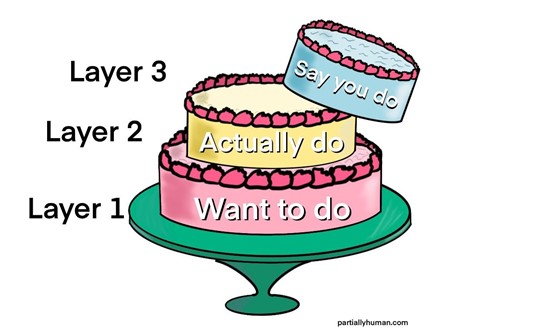
Another podcast luminary, Dan Savage, approaches this topic from a slightly different angle, more focused on how open we are about who we are. He has an organizing structure (typically referring to sexual preferences, but it also applies more broadly) that he likens to the layers of a cake:
Layer 1: What you want to do
Layer 2: What you actually do
Layer 3: What you say to the world you do
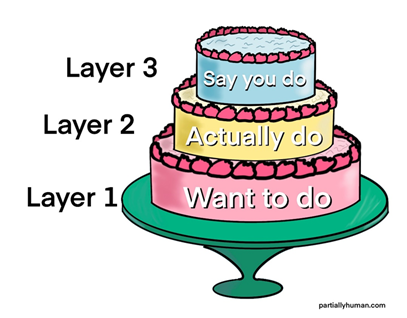
The further apart the layers are, the messier life is, and the greater our unhappiness is. The more closely we can line up the layers, the more content we are. For example, Elvis learned to dress and dance the way African Americans did in the neighborhood he grew up in, in Memphis.

He was derided for this when national audiences first saw him, calling him “Elvis the Pelvis.” (Remember, this is when segregation was in full effect still.) He was pressured into acting and looking more like a stereotypical white person. What are your options when faced with this pressure?
You can try to suppress your true desires, not acting on what you truly want, and be miserable. Meaning that what you say you do aligns with what you actually do, but that’s not what you really want.

Elvis tried that by becoming New Elvis, and he was miserable. (And guess what? People still weren’t happy. His old fans were upset about the change. There’s no pleasing people, huh.)
Alternatively, you can do what you want to do, but lie about it, living a double-life. (Note: I fully recognize that, in some cases, this is the best option if your culture is intolerant).
To do this option, it would mean that Elvis could only perform in a style true to himself in the limited communities that accepted African American culture whole-heartedly, and then pretend to be a clean-cut, All American boy everywhere else.
Or, as Elvis eventually did, you can be yourself through-and-through, loud-and-proud, all the time.

Even if the last option upsets other people, it’s more peaceful internally. The net result of aligning what you want to do with what you actually do and what you show the world, is that the people who can’t accept you will be filtered out. And then you get a shot at living a life surrounded by supportive people who care about what’s best for you!

Of course, there are downsides too—which is why so many of us choose to deny or hide pieces of ourselves. We all have to do the cost/benefit analysis of approval vs. disapproval. But if the choice is between someone else getting their panties in a bunch or whether you get to live the life you want to live, sometimes the best choice is to let other people have whatever emotional reaction they want. As long as you aren’t violating their personal boundaries, you aren’t responsible for their feelings. (I know, easier said than done!)
If you live a life where you openly do what you actually want to do, for all the world to see, that is the definition of “being yourself” (something most Disney movies say is important). And the sooner we discover what matters to us—the what we want to do layer—and own it, the better our chances for a good, meaningful life.
Discover Your Stuff I Care About Filter and Use It
Second grade me wanted to win BINGO. She did win BINGO. But she felt like she couldn’t show that to the world. She learned that you have to act cool, detached, nonchalant, like you don’t care, in order to win something she thought was more important than bingo: approval.
Young people don’t know who they are or what matters to them. And that’s okay, because learning to fit into the tribe is priority number 1 at that phase of development. It’s normal and healthy to adopt the norms of your peer-group as a kid, even though it obscures who you really are in the process. We are social animals and need to be able to subjugate our individuality for the sake of group cohesion at times. But this is tricky to navigate. What often happens is, we learn to armor up—putting ourselves in the straightjacket of “being cool.”
Our job in adulthood is to reclaim the parts of ourselves that we stuffed in a locker back in grade school. Our job is to craft our Stuff I Care About Filter and protect the parts of us that aren’t socially desirable, the parts of us that don’t impress other people, and the parts of us that are delighted when they win BINGO.

The following experiment will dive into the aspects of judgment we discussed in today’s post. Then in Part 2 of this series, we’ll look at whose opinions we should let through our Who the Heck Are You to Tell Me That Filter.
EXPERIMENT: Noticing and filtering judgment

Judgment is so ubiquitous, and scanning for it is so automatic, that it usually falls below the radar of our conscious awareness. We can’t evaluate the validity or usefulness of judgments if we skip straight to reacting to them rather than pausing to see whether we need to filter out a particular viewpoint.
STEP 1: PAY ATTENTION
Set your judgment-spotting-radar to high alert for a few days. Meaning, pay careful attention to how often you perceive judgments, from yourself and others. Most people are surprised how much time we spend thinking about what other people think of us!
STEP 2: GET CURIOUS
- What’s it like when you notice that someone might have an opinion about how you should or shouldn’t be? About what you should or shouldn’t do?
- How does it feel to get approval?
- How does it feel to get disapproval?
- How often do you say or do things solely to elicit approval or avoid disapproval?
- How do other people’s opinions affect your actions?
- How often are your actions not in alignment with your values because you don’t want other people to react negatively?
STEP 3: GET CREATIVE
- What types of judgments would you like to filter out?
- When is it more important for you to live according to your values rather than conforming to other’s expectations?
- How can you move away from chasing approval and avoiding disapproval in circumstances where that’s not what’s best for your wellbeing?
- Where do you need stronger filters in your life?

I agree with your point of view, your article has given me a lot of help and benefited me a lot. Thanks. Hope you continue to write such excellent articles.