
Is Your Boogeyman Made of Straw? Unfairly Characterizing Other People
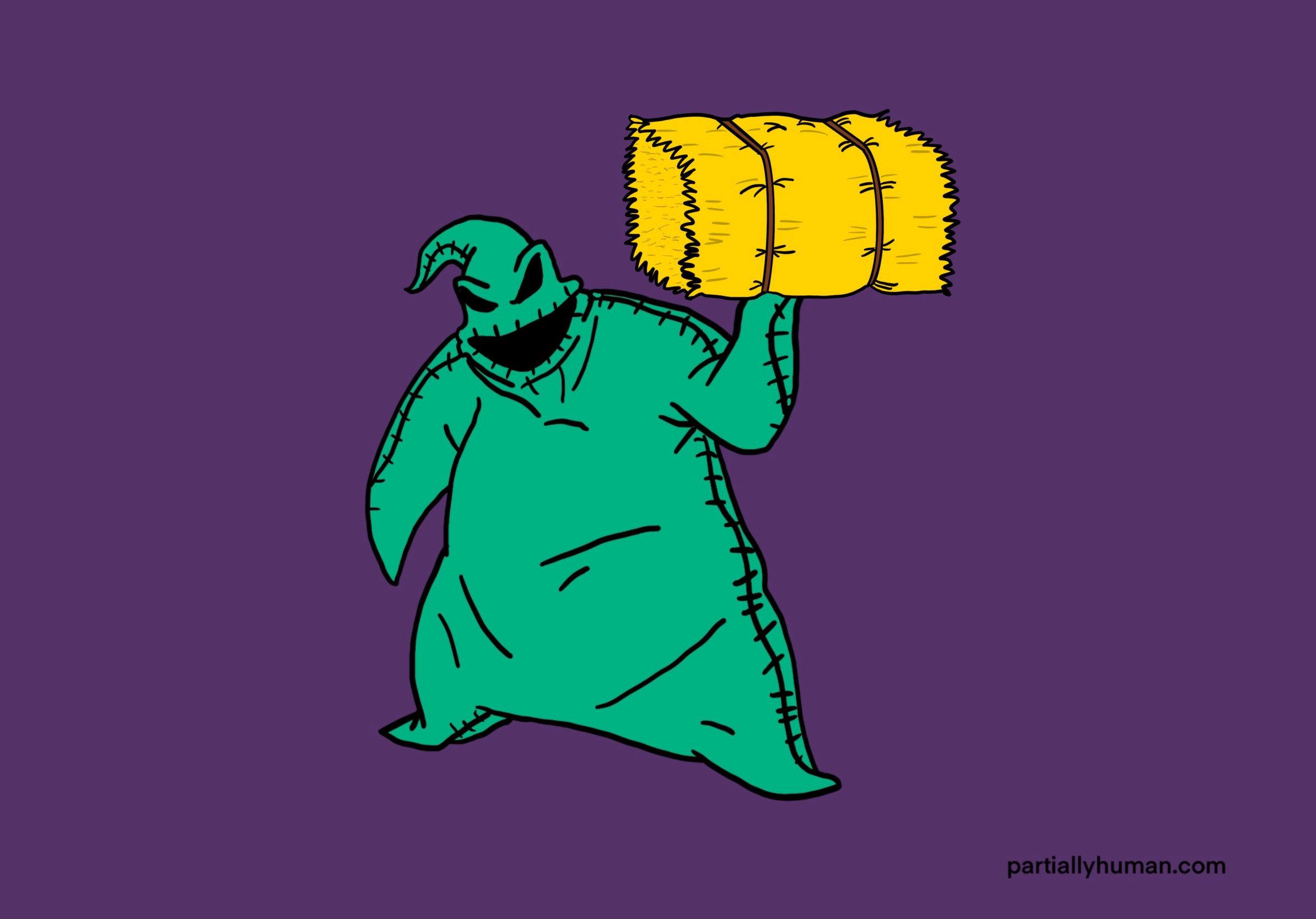
The one about how fear distorts your perception of other people.
I’m afraid I might be married to Johnny Depp. Not literally. (Unlike the woman who thinks she’s married to the Eiffel Tower.) But when I see my husband spend money in ways I consider less-than-frugal, my mind conjures up images of Johnny Depp’s reckless spending: $5 million to shoot the ashes of his friend out of a cannon, $30K per month on wine, many millions on guitars, cars, and art, and $1 million just to have his collection of Hollywood memorabilia (which spans 12 storage facilitates!) archived.
Money weighs heavily on me. My greatest fear is ending up in a van down by the river. My biggest dream is financial independence. Reckless spending—like Johnny’s—seems the surest path to a nightmare come true.
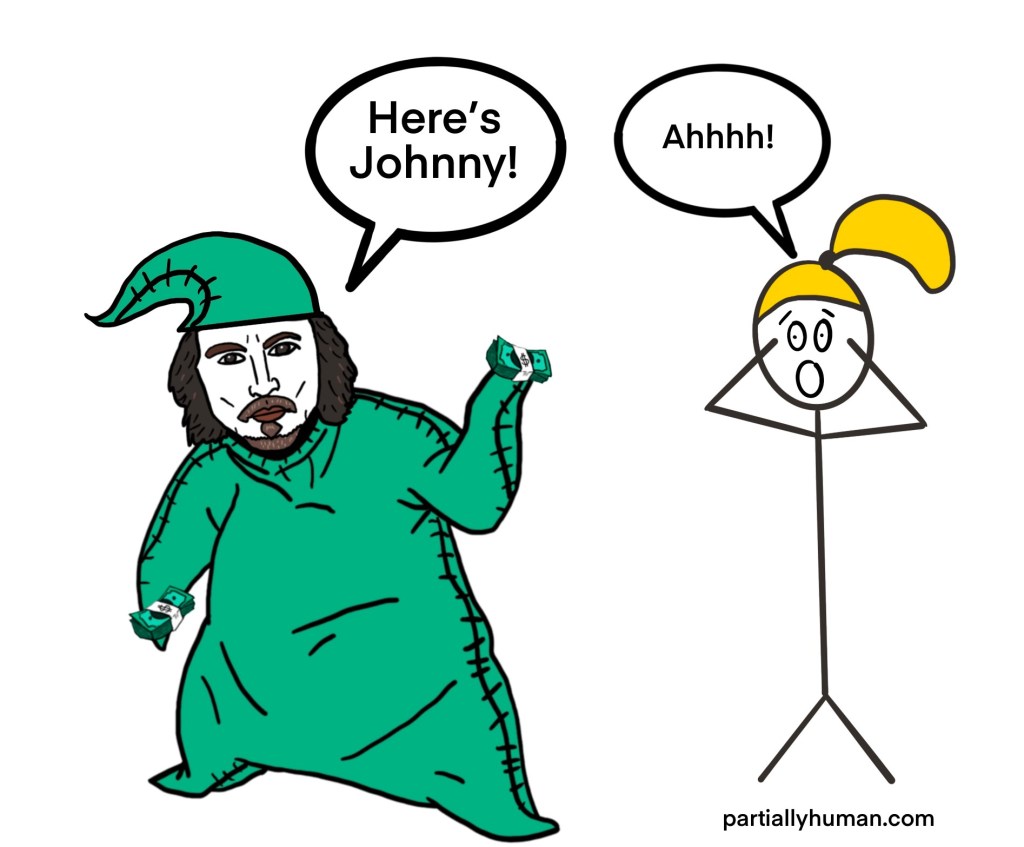
When I see hints that my husband might be like Johnny Depp, instead of seeing my husband, I see my boogeyman.

Today’s post is about how fear causes you to see people in an unfair, unflattering light, and how to instead see them a bit more clearly.
Fear Changes How You See Things


Fear is a funny thing. It distorts your senses, making you falsely think you spotted something dangerous. When we carry that fear into our relationships, it distorts our perception of other people—unfairly transforming them into monsters. When I see my husband buy first-class plane tickets or when our front step is stacked with Amazon boxes, fear creeps in and warps my view of him. I see someone who might one day spend $1 million to have his 12 storage units of memorabilia archived.
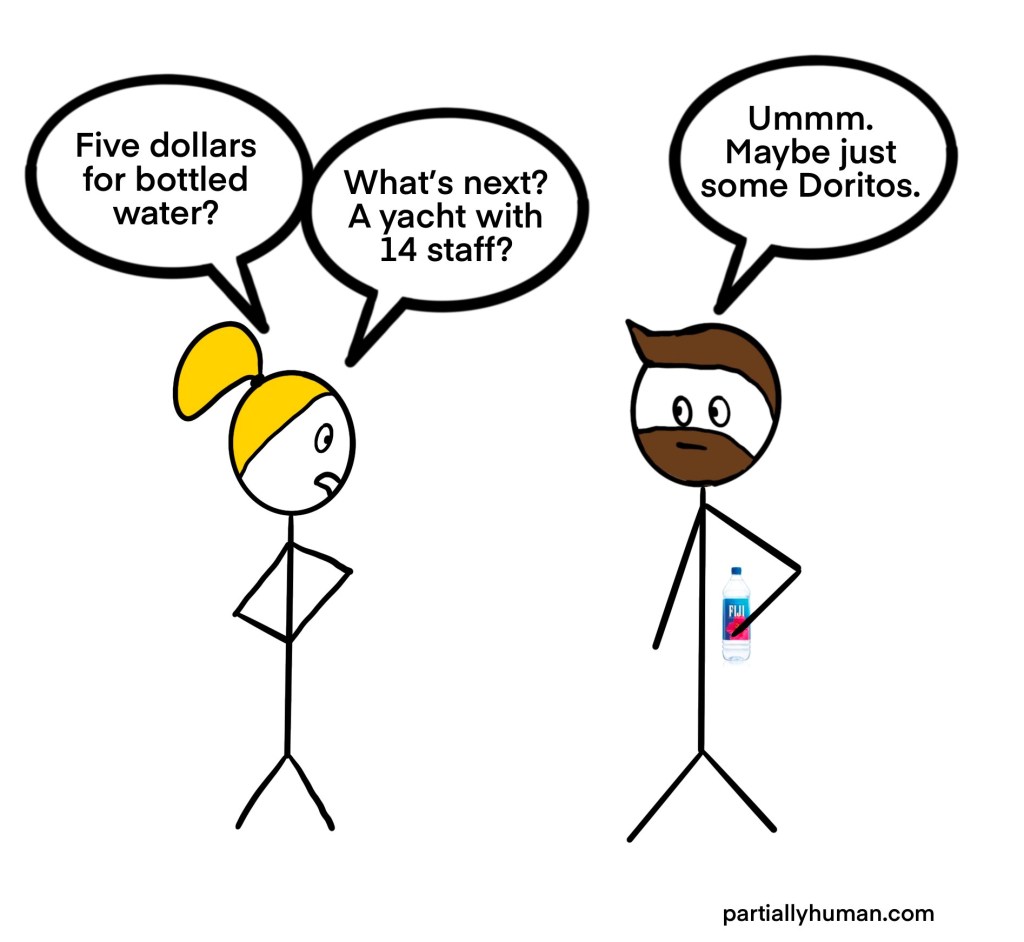
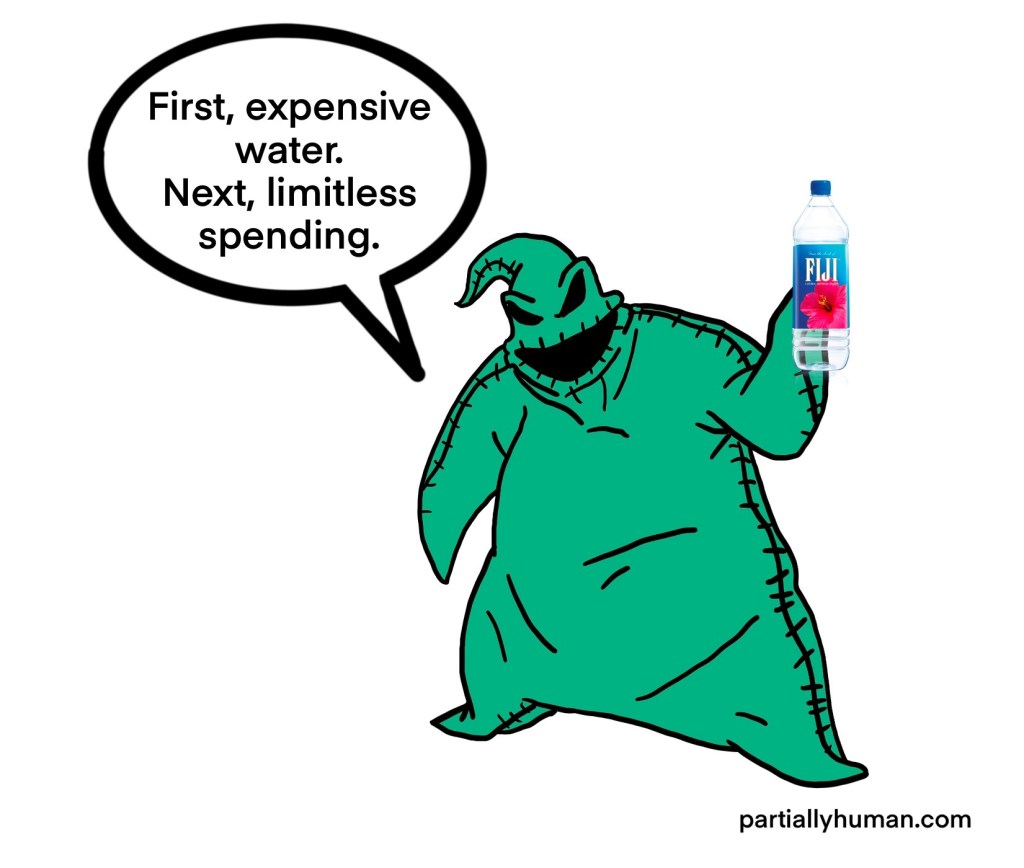
This is not fair. Nevertheless, it’s how the brain works. Instead of merely reacting to facts in a contextual vacuum, emotions pop up to ask: What if this incident means so much more? What if it’s a signal of something worse, something scarier? What if there’s a monster lurking, a boogeyman hiding?
On the Netflix series Love is Blind (season 3), Cole asked Zanab whether she was about to eat two Cutie Clementine oranges. Zanab responded (with an edge to her voice), “Maybe. That’s a serving. You okay with that?”

Later, during the reunion episode, we find out Zanab did not think Cole’s question was an innocent inquiry into whether she was planning on having a snack before going to a big dinner, born purely out of concern that she might ruin her appetite, as he claimed. When Cole asked Zanab, with some surprise in his voice, “Are you about to eat two of those?”, what she heard was: “You’re overweight; you aren’t my type; I’m not attracted to you.” She had been harboring these insecurities throughout the show, and that fear morphed Cole’s words into something more sinister than he had intended—transmuting him into her boogeyman.

Fear also makes us see slippery slopes. We worry that a small step in the “wrong” direction will lead to a horrific chain of escalating events. Then, instead of evaluating just the small step, we react to the many untaken future steps that have limited basis in reality. Near me, in Washington DC, there was a drama-filled dispute over whether someone was allowed to have two giant Transformers statues in front of their house.

A prominent critic of the statues contended that “Whether people like the Transformers is less the issue than whether they should be placed outside Howard’s home. [Howard] had regularly ignored the established process for using public space, and leaving them there would open the door to other residents following suit.” She said, “With no permit… this is a safety issue. They have resulted in crowding, trash, bottlenecks, and pedestrians having to walk into the street. This would set a dangerous precedent. If these are allowed to remain, nothing is off limits.”
Did you see how she transformed some Transformers into boogeymen? Them being there was dangerous and meant eventually nothing would be off limits.
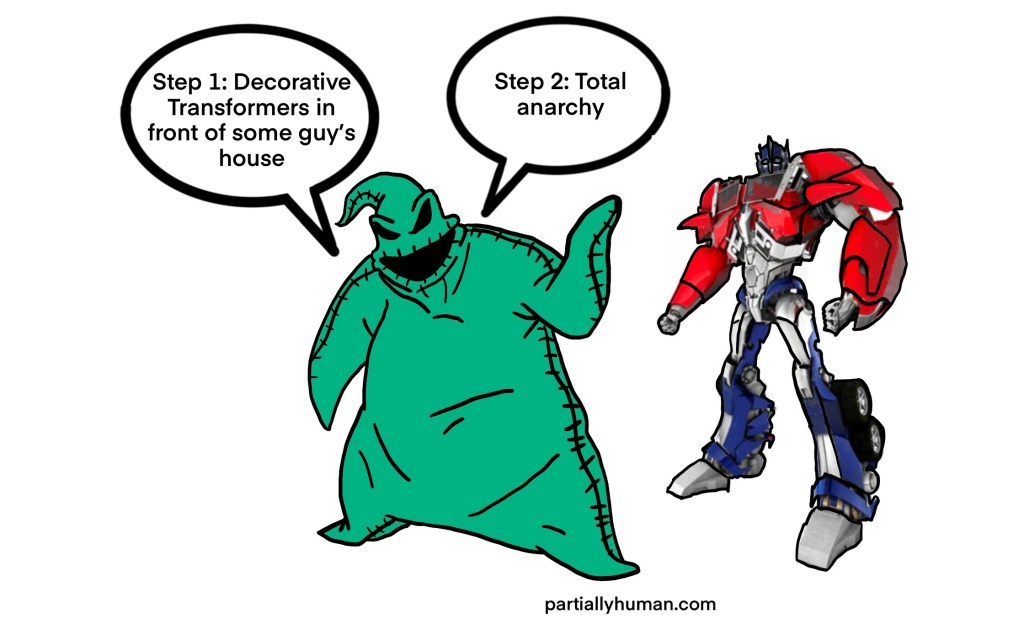
It’s the same kind of thinking that makes my mind leap from my husband buying first-class plane tickets to me living in a van down by the river. The net impact of that thought process is that innocent people get dragged through the mud.
Fear Turns Innocent People into Boogeymen
You’ve experienced being turned into a boogeyman if you’ve ever argued with anyone. If you say you like a specific political candidate, someone else says that means you’re racist or like murdering babies. If you never initiate holding hands, your partner says that you don’t care about them. If you say that people should eat vegetables, you’re accused of body shaming and being insensitive to people who can’t afford fresh food. I don’t think there’s a single thing you could say that couldn’t be twisted into something malevolent by people grappling with fears about other peoples’ motives and intentions.

Fear is a powerful force. It makes us think and do ludicrous things. This was illustrated beautifully by The Boys, a show about superheroes on Amazon. In an episode where a superhero is trying to whip up fear and anger at “Super Terrorists,” you see a man slowly become more and more concerned about “the threat,” eventually killing an innocent person.
He thought he saw a Super Terrorist. But he didn’t. He saw a boogeyman. And boogeymen are not real.
The implications of this tendency are both obvious and tragic. Every time there is drama with a group—political, ethnic, religious, etc.—some people see boogeymen when encountering an innocent person who looks like one of them. Right now, people are lashing out at random people, who happen to be Jewish or Palestinian, trying to go about their lives because some have decided that there are good guys and bad guys and that an individual looks like one of the bad ones. After Covid-19 broke out, people attacked random Chinese people who had literally nothing to do with the virus. After 9/11, people harassed random Arab-looking people who weren’t even from any of the countries the U.S. was mad at. The speed at which we transform normal people into subhuman creatures undeserving of kindness and dignity is both breathtaking and heartbreaking. This propensity is the lifeblood of most human atrocities.
This begs the question: how do you know when you’re seeing a boogeyman instead of the real person beneath your own delusion?
The answer: look for straw.

When Fears Are Made of Straw
I’m sure you’ve heard of a straw man argument, where someone distorts, exaggerates, or misrepresents someone else’s argument to make them sound ridiculous. Like this:
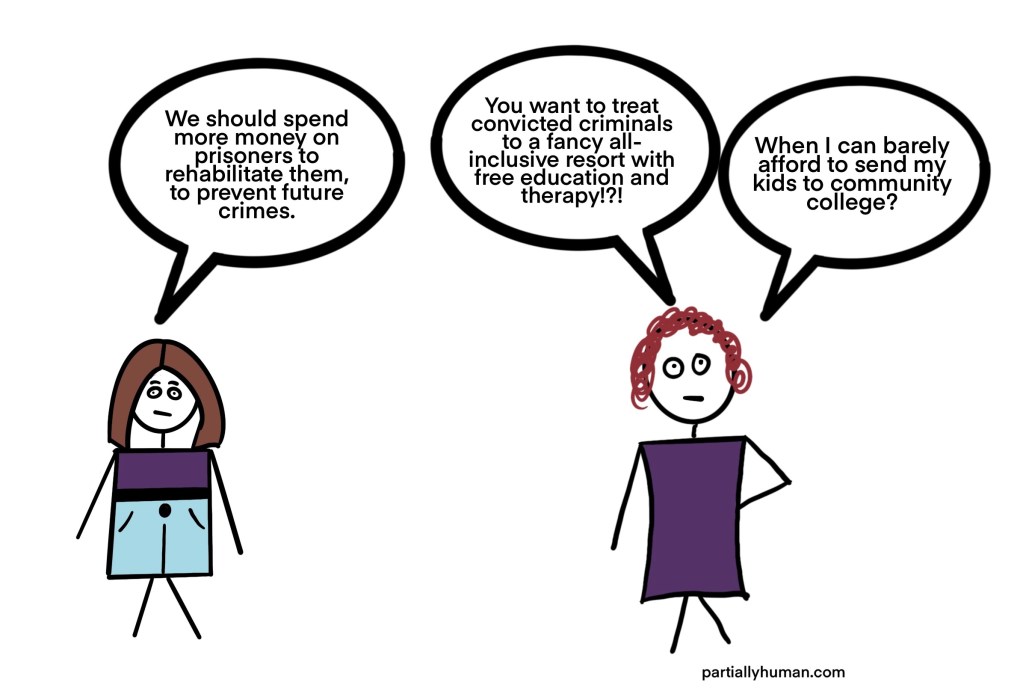
This is usually thought of as a deliberately dishonest tactic. Maybe that’s true sometimes. But I think it mostly happens inadvertently. Someone says something that another doesn’t totally agree with, and their hackles go up—they get scared. Conflict invokes fear. That fear triggers the brain’s tendency to exaggerate the bad things, in this case, the flaws in the other’s argument. This leaves you with a twisted, unfair understanding of their view.
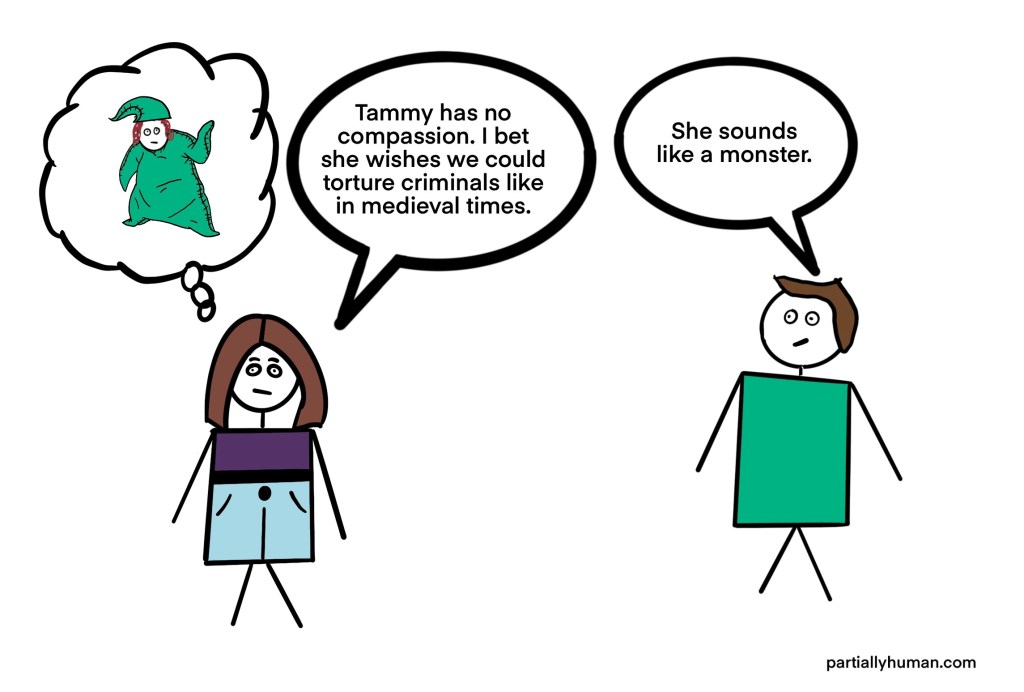
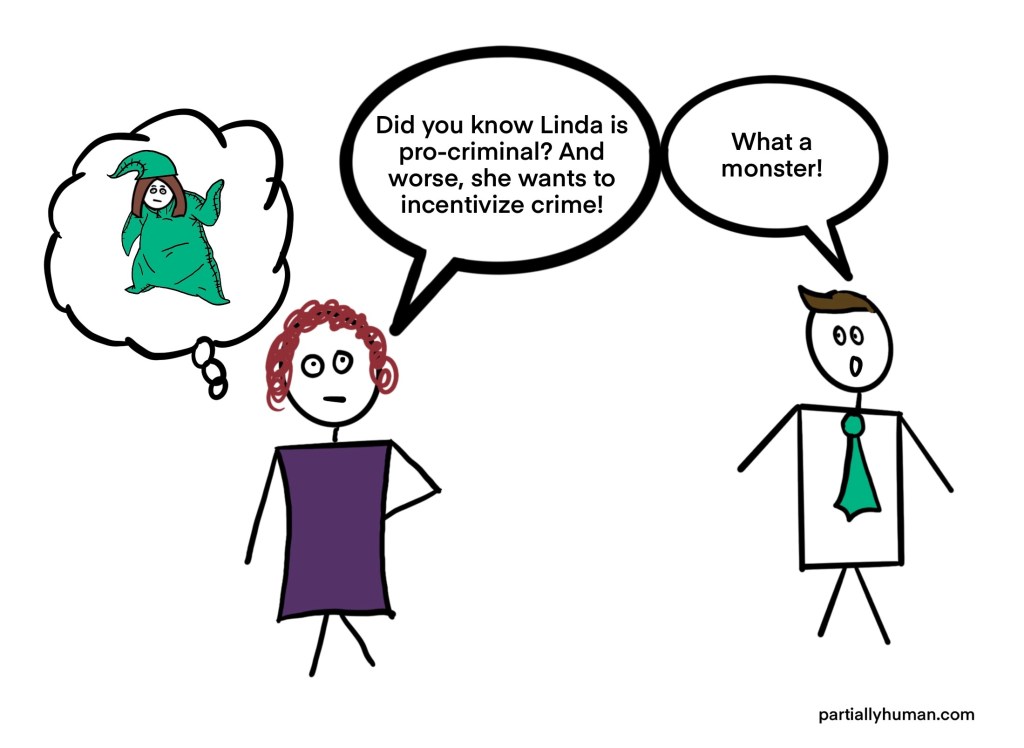
Tammy and Linda just covered each other in straw. They stripped away the nuance of the other’s views, interpreting things in the most unflattering light possible. There’s no grace, no assumption of positive intent, no recognition of the other’s humanity. When we are at our least generous—smearing someone else’s character in broad strokes—we are tossing straw on them that covers up their goodness.


Maybe we should be wary of some people and regard what they’re saying with a skeptical eye. Humans can have complicated motives. And we do bad things. And believe stupid stuff. It may feel safer to err on the side of not trusting anyone—strewing straw all over the place. This results in holding excessively unkind views of people. But what about loved ones? People who care for you?
There’s plenty of straw strewn over our loved ones. This is a classic problem in close relationships—we harbor irrational fears about those closest to us, causing us to blow innocuous incidents out of proportion and recast them as boogeymen. Terry Real refers to this dynamic as the Core Negative Image. He contends that, often, when we argue with our partner, we aren’t actually arguing with the person standing right in front of us. Instead, we are engaging with a fantasy version of them with exaggerated negative traits. We concoct a narrative about their fundamental character flaws when they do things we don’t like. The fact that they didn’t put their dishes in the dishwasher isn’t because of something innocent like they forgot or were distracted, it’s because they are selfish and lazy and don’t respect you.
When you are sucked into your brain’s most irrational, least compassionate, least loving frame of mind, you project unfair and unflattering traits onto others, even those you love most. These projections are wads of straw that obstruct your view. You transform flawed but generally good people into ne’er-do-wells and evil-doers. In the dark, these ridiculous caricatures feel true. But your loved ones, and most other people, are not boogeymen. To see the truth, we have to shine a light on the fear, we have to see past the straw.
Stripping Away the Straw, Unmasking the Boogeyman
Bringing awareness to the underlying beliefs and emotions driving our impulse to paint unflattering pictures of other people reveals how silly we are, and how flimsy our stories are. It takes an intentional, conscious effort to spot the straw. And, understandably, there’s a part of us that eschews effort. Unmasking the cognitive biases and heuristics that lead us to see others as monsters reveals our own monstrous tendencies: greed, hatred, delusion, pettiness, and the ease with which we develop false beliefs. We have to be open to the fact that we often don’t see things clearly; this is uncomfortable. However, it’s better than living life surrounded by false boogeymen—a much scarier fate.
The core task is to figure out what’s true by challenging our fear-laden stories. Here are a few techniques designed to do that.
Steel Man Them
The opposite of a Straw Man argument is a Steel Man argument. This is where you craft the strongest version of someone else’s view. Instead of solely focusing on the flaws in their thinking, you highlight the bits that have merit. This is how to navigate conflicting views with kindness. Daniel Dennett has 4 rules for how to do this:
- You should attempt to re-express your target’s position so clearly, vividly, and fairly that your target says, “Thanks, I wish I’d thought of putting it that way.”
- You should list any points of agreement (especially if they are not matters of general or widespread agreement).
- You should mention anything you have learned from your target.
- Only then are you permitted to say so much as a word of rebuttal or criticism.
The Four Questions
Byron Katie developed a system called The Work, a self-inquiry process intended to shake up our myopic beliefs. To do it, you choose one thought—in this case, your negative story about the other person—and ask yourself 4 questions about it:
- Is it true?
- Can you absolutely know that it’s true?
- How do you react when you believe that thought?
- Who would you be without the thought?
After answering these questions, come up with a “turnaround,” a sentence expressing the opposite of what you believe. So, for instance, “He spends too much money,” could become, “I spend too much money,” or, “He doesn’t spend too much money.” This strategy challenges you to view competing beliefs from different angles, forcing you to confront evidence you discarded when constructing your initial verdict.
Core Negative Image Exercise
Adapted from Terry Real’s book, The New Rules of Marriage, this exercise was designed for couples but can be done about any boogeyman.
- Make the Core Negative Image (CNI) you hold of someone else explicit: In a moment when you are not in conflict, write out, in some detail, how you view the other person when they are at their all-time worst—their negative attitudes, traits, actions, and motives.
- Acknowledge the truth in the CNI: Other people have flaws and it’s okay to see them. The goal isn’t to gaslight yourself or gloss over the bad things. This also means acknowledging the truth of negative core images other people hold about you (hey—we all have a little Johnny Depp in us, do we not?), not the exaggerated version you might hear when emotions are high, just the kernel of reality imbedded in the story.
- Identify behaviors that contradict the CNI: What does the other person do that disproves your CNI? For example—regarding my husband’s spending—when does he demonstrate frugality? When is he careful with money? When does he prioritize saving? What evidence contradicts my story?
- Acknowledge what the other person is like when they are at their best: Your core negative image is your fear of what they could be at their worst. Our brain loves to fret about that kind of thing! But what could they be at their best? Is that version of them inside there somewhere? What would that look like? What evidence supports that narrative?
We are all the sum of a jumble of virtuous and uncouth characteristics, but often the bad stuff gets more attention. Rebalancing that focus toward the good stuff not only leads to better, more satisfying relationships, but it’s also more accurate.
Pretend They’re a Dog
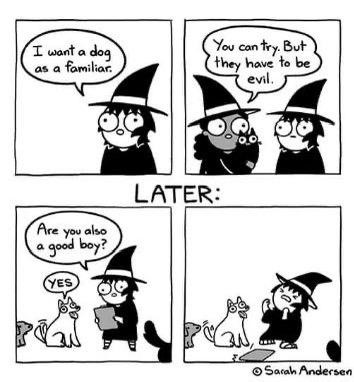
There is not a single thing my dog could do to make me believe he is bad or flawed. The fact is: he’s immaculate. All other data must be arranged to line up with that truth. If he peed in the house, then it must have happened despite his very best effort not to. If he stole some food, then it must be that he didn’t realize he wasn’t supposed to. If he bit someone, then he must have had good reason to. The default assumption is that, at his core, he is a good boy. Any behavior contrary to that is circumstantial or accidental or a misunderstanding. This is the ideal lens through which to view other people too—as we do dogs. (I know I usually portray people as fancy monkeys, but I have an easier time feeling bottomless empathy for dogs. Monkeys can be real buttholes.)
What if the other person is doing their best? What if they are a good person who is a bit confused or under the influence of difficult emotions? What if they are immaculate, then, what plausible explanation would account for their behavior?
These exercises require you to hold multiple truths in your mind simultaneously—a hallmark of emotional maturity. They help you see a more reasonable, more complex reality. And, ultimately, they make boogeymen disappear.
There Are No Boogeymen
The reality is that my husband is not reckless with money. Yes, he flies first class. But he also always takes the 6 a.m. flight to save money (something I won’t do). Yes, he’ll buy overpriced water. But his weekly grocery bill is actually less than mine. Yes, he buys fancy electronics and giant TVs, but his living expenses are low and he never spends more than he earns. When I peel back the straw, I see that my husband is not even 1% as financially reckless as Johnny Depp is.
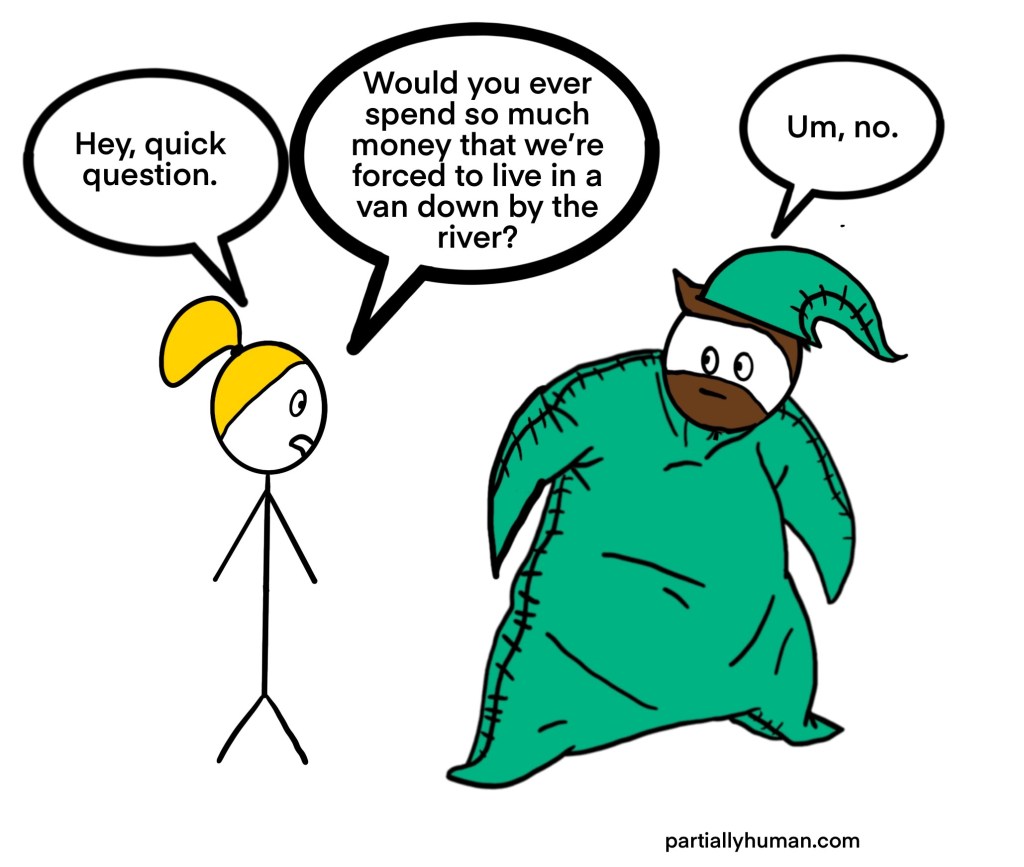
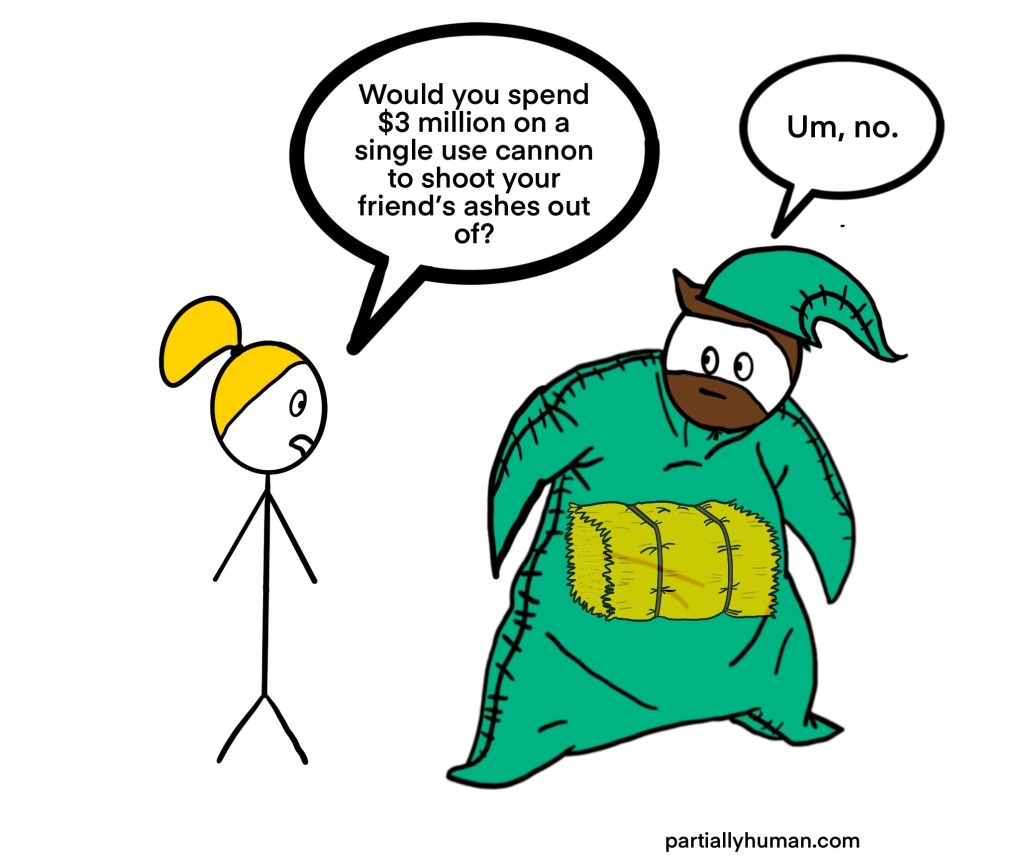
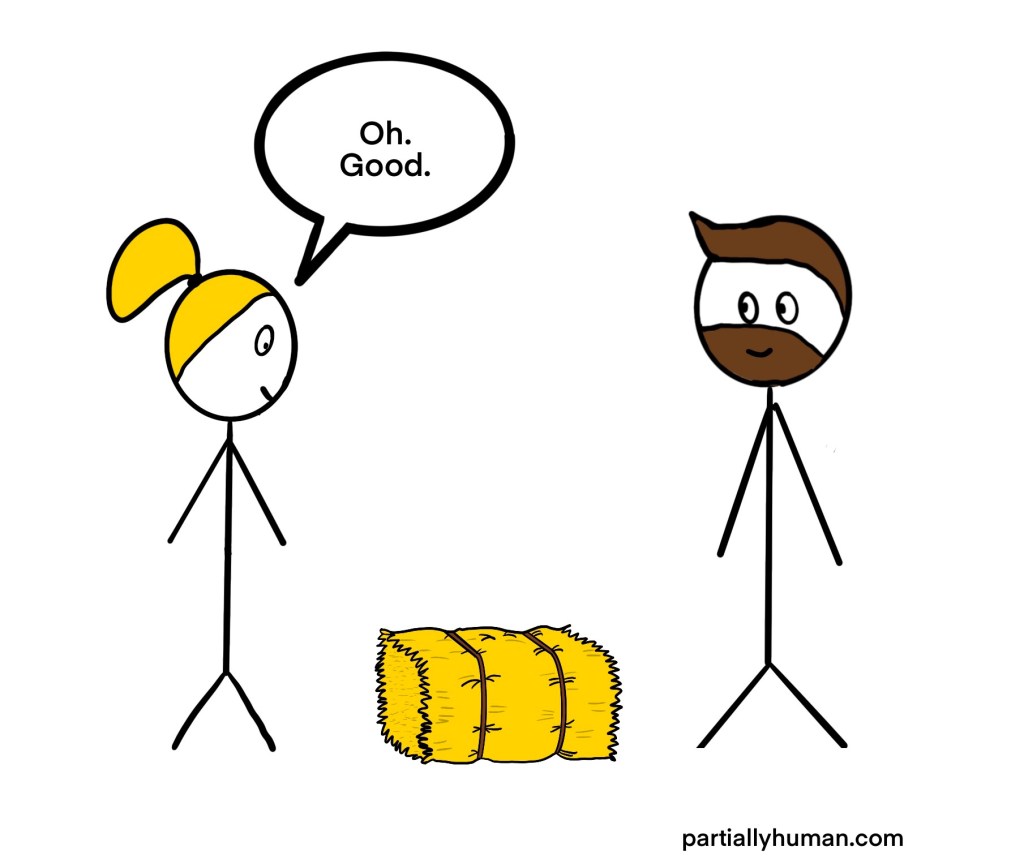
Ready for an M. Night Shyamalan twist? I’m afraid I’m Johnny Depp. I’m afraid I will spend too recklessly to meet my financial goals. When I was younger, I spent money as fast as I earned it. Every once in a while, still, I’ll spend a bunch of money I hadn’t planned on spending, and it freaks me out. Is it within me to lose control entirely, like Johnny? I look at my closet and think about all the stupid money I’ve spent over the years—the many shoes I only wore once because they weren’t comfortable, the designer purses I rarely use, the 80+ lipsticks and dozens of eyeshadow pallets—and I feel an urge to be hypervigilant about future nonsense spending. My picking on my husband’s spending is just like when I made fun of other kids for watching Barney when I was a closeted Barney-lover. We judge harshly in others the things we feel ashamed of about ourselves.
My fears about myself are made of straw too. Sure, parts of me are impulsive and short-sighted. But other parts of me are not. My good qualities run the show most of the time. There’s no need to let my worst moments define me or to fear that that’s who I really am at my core. Other people deserve the same courtesy.
Which brings me back to Johnny Depp. I have held him up as an example of someone worth fearing in this article. That’s not fair. He’s made a lot of money, so of course he can buy things difficult for me to fathom. And, despite his messy divorce, I’m sure he’s capable of earning loads more. I looked up his current net worth: $150 million dollars. ONE HUNDRED AND FIFTY MILLION DOLLARS. More money than I will ever see in my lifetime. That’s what I’m scared of? Is this my boogeyman?

I encourage you to reckon with your own boogeymen. What are you afraid of?
EXPERIMENT: Spotting Boogeymen

How clearly do you see other people? To what degree do you unfairly exaggerate their negative traits under fear’s influence? This experiment is about spotting and removing the straw that obstructs your view of others.
STEP 1: PAY ATTENTION
Notice when you:
- Feel on-guard around someone or have a bad taste in your mouth about them
- Are constructing arguments and counterarguments in your head against them
- Label them using negative terms
- Feel someone is more bad than good
STEP 2: GET CURIOUS
Ground yourself in the facts:
- What actually happened?
- What led you to believe and feel the way you do about them?
- What evidence did you select to construct your narrative?
- What evidence did you ignore or discount?
Notice your stories and interpretations:
- What’s a story, assumption, or inference, and what’s merely raw data that anyone would agree with?
- How might someone else reasonably interpret the same facts?
STEP 3: GET CREATIVE
Try out the exercises outlined in this article.
Steel Man Them:
- You should attempt to re-express your target’s position so clearly, vividly, and fairly that your target says, “Thanks, I wish I’d thought of putting it that way.”
- You should list any points of agreement (especially if they are not matters of general or widespread agreement).
- You should mention anything you have learned from your target
- Only then are you permitted to say so much as a word of rebuttal or criticism.
The Four Questions:
- Is it true?
- Can you absolutely know that it’s true?
- How do you react when you believe that thought?
- Who would you be without the thought?
And then turn the belief around to see if the opposite is true too.
Core Negative Image Exercise
- Make the Core Negative Image (CNI) explicit
- Acknowledge the truth in the CNI
- Identify behaviors that contradict the CNI
- Acknowledge what the other person is like when they are at their best
Pretend They’re a Dog
Consider:
- What if the other person is doing their best?
- What if they are a good person who is a bit confused or under the influence of difficult emotions?
- If they are immaculate, then, what plausible explanation would account for their behavior?
You can’t resolve conflicts with monsters, only with other humans. I hope these exercises transform the boogeymen in your life back into mere mortals.
Good luck!

Great article, Kt, and full of good advice.