
On Navigating the Treacherous Terrains of Bagging Groceries and Diversity

The one about how different people want their differences treated differently, but we’re not mind readers so that makes things difficult.
During a stint in my early 20s working at a grocery store, I learned that people have different—sometimes strong—preferences for how they like their groceries bagged. It turns out there are LOTS of different ways to bag groceries, and lots of ways to do it “wrong” (and I don’t mean just putting eggs underneath cans).
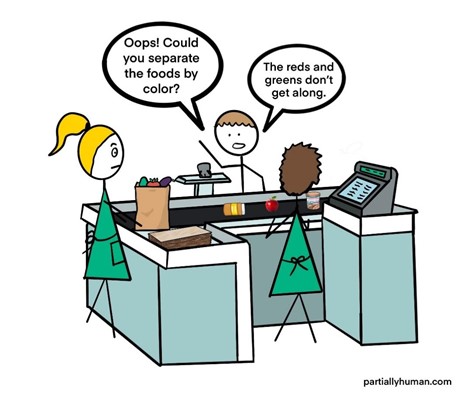
Some people want:
- The bags packed as full as possible (to prevent wasting paper bags or so there are fewer bags to carry)
- The bags packed as light as possible (so the bags don’t risk ripping or are easier to carry)
- Non-food items, like cleaning products, bagged totally separate
- Dry goods, including cleaning products, all packed together
- Meat packed separately (to prevent contamination)
- Meat packed alongside other refrigerated stuff (to keep it cold)

You get the point—lots of preferences!
But this is what came to fascinate me: some people seemed to think that there was one RIGHT way to bag groceries; they mistook their preferences for truths. And they were AGHAST if you did things differently.

I eventually learned that you have to pepper people with questions to navigate their preferences. Bagging groceries had to be a collaborative effort to get it right. And most people were delighted (or at least fine) when I’d ask about their preferences.
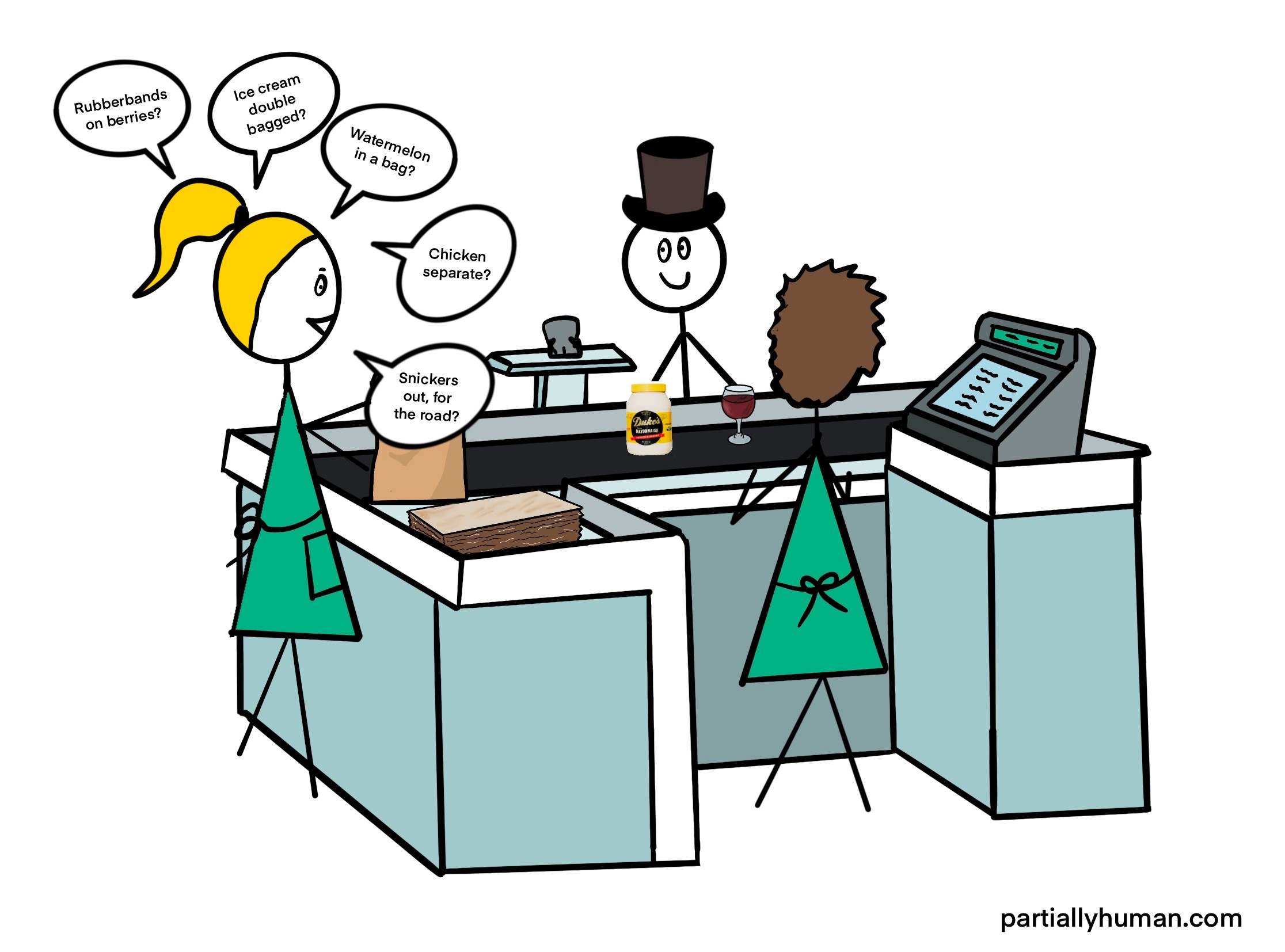
To my surprise though, some of the strong-preference-people remained prickly. They were annoyed that someone was asking them questions, like, why are you asking me something that has an obvious correct answer? As if the right way to bag groceries is axiomatic. As if I should read their mind. These people made me feel a little off balance, like I had to be on guard. It felt like I was traveling unknown territory without a map, and without room for missteps.

I have similar feelings when navigating other types of diversity. Some people are happy to talk about how they would like you to approach their differences. But some act like picky customers who think there is one RIGHT way to traverse their terrain. They have strong preferences on how you should do things while simultaneously bristling at having to provide instructions. We walk on eggshells around them to avoid getting harangued for getting it “wrong.” They are oblivious to the fact that there are lots of ways to pack groceries, and lots of ways to relate to someone from a different background. This is problematic.
Here is the reality: when two (or more) people interact, all parties involved need to communicate extensively about their preferences. We aren’t mind readers. And there isn’t one universal approach to anything. Understanding those things is a key component of maturity and wisdom.
Navigating Different Cultures in Different Parts of the United States


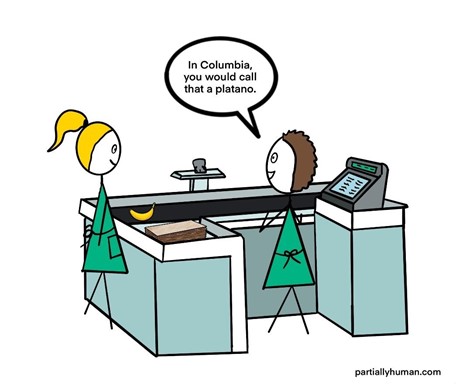
When I lived in Miami—a tremendously diverse area—I interacted regularly with people who mostly wore their cultures like a badge of honor. They wanted you to know and understand their ethnicity, religion, or sexuality. The unique traits of their subculture were a part of their identity. The Jewish people there expected you to know when their (many!) holidays were and understand their dietary restrictions. People from Nicaragua would tell you how good their food was. I had a coworker who started every other sentence with “In Columbia.”


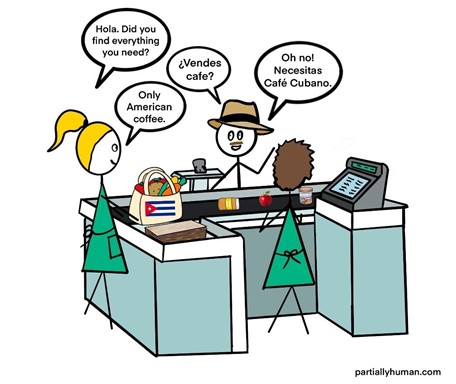
And Cuban people (who make up 25% of the population) loved it when you acknowledged the trappings of their culture—cafecito, roasting pigs on Christmas Eve, playing dominoes, or salsa dancing. They seemed proud of their stereotypes. Most second and third generation Cubans strongly identified as Cuban (while still being proud to be American).
Where I live now, in Northern Virginia, a place that is also diverse, things are different. Not better or worse, just different. (Plenty of bias in both places, as I suspect is the case in most of the world; it’s human nature.) Here, I’ve noticed people prefer to downplay their differences. The Indian, Korean, and Vietnamese people I interact with never tell me about their countries. They don’t highlight what’s unique about their cultures or expect me to associate specific foods and holidays with them. Some second-generation immigrants here will bristle if you ask them where they’re from originally, because they want to be seen as just American. Asking about or assuming anything along the lines of a stereotype is considered crass.

The default approach to navigating cultural differences in South Florida would be inappropriate just 4 states north. This is just one small example that illustrates that different preferences are as abundant and varied as foods in a grocery store.
(This post is supposed to demonstrate the depth and breadth of people’s preferences, but even the above anecdotes are guilty of sucking the nuance out of things! For example, I know people in Virginia who love to be defined by their culture or whose entire identity revolves around a distinctive trait. And I know people in Miami who want nothing to do with their heritage or balk at being defined by a unique characteristic. See—lots of ways to bag groceries in every locale! So please humor me and pretend that I didn’t oversimplify things.)
The problem isn’t that there are different approaches to handling differences. The problem is that we take our norms for granted and think other people are rude idiots for not adhering to our preferences. The problem is that we don’t realize that our preference is just that—a preference, not a truth.
There Are Loads of Differences and Loads of Ways to Approach Them
I’m sure there are lots of reasons why subcultures in Miami approach acknowledging their diverse traits differently than those in Virginia do—different demographics, different power dynamics, etc.—but the reasons things are different is beside the point. The point is: people have different preferences. There is no one RIGHT way to interact with someone from a different culture than you, just like there is no one right way to bag groceries.
I hate the narrow focus we have on a handful of differences. I understand why things like race, gender, age, and sexuality get all the attention, but on an individual-by-individual basis it doesn’t make sense to be precious about those specific things. It’s often the random unsung differences—like bacon doneness preferences—that cause friction.

Given the variety of preferences, it’s hard to surmise what might be a trap door for someone. And there are a few of reasons why we don’t even try: 1) it’s somewhat uncomfortable when someone is different so we try to ignore it; 2) we want to view the things about ourselves as superior and we don’t have an ego that is strong enough to meet someone’s differences with grace, and that makes things awkward; 3) we look at the world through a myopic lens that benignly lacks awareness. These responses are all part and parcel of being human!
And yet, we all have something about us that makes us feel weird in certain circles. And everyone we know has something about them that we don’t relate to. Yet it’s surprisingly hard to have this broad awareness that most stuff about us is just one option of many potential flavors.
Navigating the preferences of someone different from you is obviously harder than bagging a picky person’s groceries. Much harder. I mean, my gosh, just look at all the differences married people, who chose to be together on purpose, struggle with: cleanliness standards, financial habits, parenting styles, intimacy appetites, love languages, and so on.

If even two people who love each other have difficulty navigating differences, how are we supposed to get it right with everyone else?
The Trickiness of Navigating Differences
Part of the challenge is figuring out that there is a difference to be aware of in the first place, and then assessing whether or not it’s a sensitive topic. And the other part is figuring out what to do with that information. To the first part, in my experience, most people are fine with you asking about their differences. But not always.
Spotting Differences
There are a few things that make a difference more difficult to navigate. The biggest one that makes things go sideways is if someone is uncomfortable with that part of themselves or they think you’re judging them negatively for it. And the more personal a difference is, meaning the more someone identifies with it as a fundamental part of themselves, the more sensitive it will be. Most people aren’t too attached to a preferred grocery bagging method, what movies they like, or whether or not they can ski. Many are deeply attached to their ethnicity, religion, sexuality, and culture. This delicate relationship we have to the things that we think constitute “me” is what makes navigating diversity difficult. These are the things that put our ego at stake and cause us to lash out if their value is threatened.
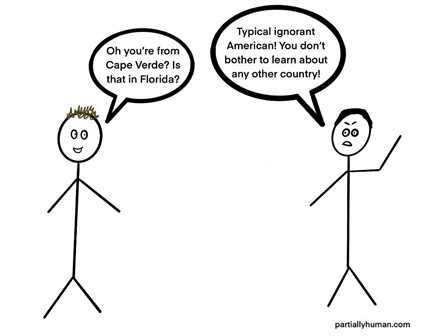
Additionally, how uncommon a difference is helps predict how uncomfortable someone may be about you broaching it. It’s baked into us to feel weird about being different, so it’s understandable that shards of inferiority would crop up when something about us runs counter to the norm. We’re afraid we’ll be stigmatized as an “Other.” So we get defensive when that difference is highlighted during an interaction.

Seemingly nothing is off limits for people to feel sensitive about. It’s like if a person has a wound in an area, and someone mentions something about or tangentially related to that wound, they hear the words through the filter of a scab that distorts the speaker’s meaning into something malicious.

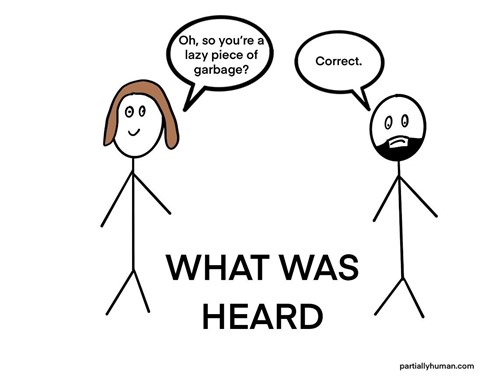
This is sad. And understandable. And not productive.
Doing Something About Differences
I’ll be brave enough to say it—some people’s preferences are terrible. I used to have a coworker who liked to put project plans in PowerPoint. POWERPOINT! It was unacceptable. After learning her preference, did I have to adhere to it? Heck no. Did this ruin our relationship? Not in the slightest.
There can be a sense that it’s worse to know about someone’s preference and disregard it than to just not find out the preference in the first place. I disagree. More information is always better. And it’s kind of cool when people with different preferences can explicitly acknowledge them and still work together effectively and hold each other in high regard.
Sometimes you can accommodate someone’s preference, sometimes you can’t. Sometimes you just don’t want to. Sometimes that’s a problem. Sometimes it isn’t. What can I say? Life is hard. And navigating preferences is hard too.
Navigating Different Preferences
There’s so much fear of doing it wrong that some people go too far in their effort to not offend. I listened to a guided meditation once where the teacher instructed us through a body scan—where you pay attention to the feelings and sensations in your body. As she moved our attention to different parts of the body, she would caveat the instructions to accommodate every possibility, like—“Pay attention to the feelings in your hands, if you have hands. If you don’t have hands, you can pay attention to whatever sensations are grabbing your attention. Now notice the sensations in your feet, if you have feet. Otherwise…” and so on. It was a little much.
Adding oodles of disclaimers has been fashionable in the self-improvement space recently. People try to acknowledge that advice might not be attainable for people with specific attributes or circumstances. I think it’s nice to explicitly recognize that things aren’t one-size-fits all, but it’s also a high bar to expect us to take into account that some people who are listening to our meditation might not have hands or feet. I hope society lands in a middle-ground, where there’s a general awareness that our offering doesn’t apply to everyone, but tries to take into account more than just the single dominant viewpoint. It would be paralyzing—and impossible—to make everything be for everyone.

Both people in any given interaction have a part to play. Both people need to realize that everyone has different preferences about how they want their differences treated. Don’t just willy nilly start bagging someone’s groceries without asking questions. And don’t get mad at how someone is bagging your groceries if you think they’re doing it “wrong.” Instead, start a dialogue. None of us are mind readers. Conversation is the only compass we have in our interactions with each other. Ask questions. Express your preferences clearly and directly. You’ll probably mess it up sometimes, but this is one of those “damned if you do, damned if you don’t” situations, so don’t scrap the whole endeavor if you misstep.

And if you are a person who tends to bristle, who has specific preferences and feels upset when other people don’t adhere to them, I know I can’t just tell you to stop it. I’m sure there’s some baggage there and you are protecting yourself. But I hope you see the broader dynamic this creates—where collaboration is difficult when people need to walk on eggshells. And it’s not just difficult for those tiptoeing around you, it’s also difficult for you. It doesn’t feel good to be so rigid and on guard. It’s not a happy place. So let’s head somewhere happier.
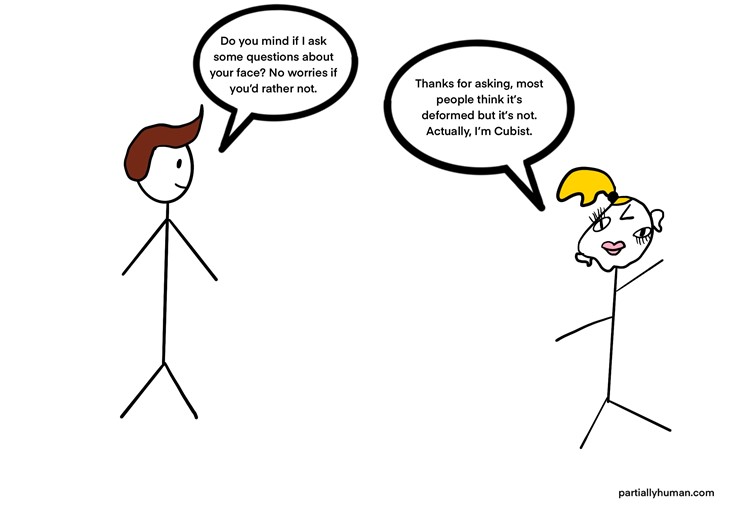
Here’s the call to action: let’s navigate our different preferences better. Try it out!
EXPERIMENT: Navigating Different Preferences
Like every Partially Human experiment, our goal is to expand awareness, take action, and gain insight. The ultimate goal is wisdom—seeing reality as it really is and taking effective action in accordance with it. The diversity space is ripe for this type of exploration. And again, I’m not talking about the classic race, gender, age, etc. type of diversity. Every person you interact with has different preferences than you do. You have to navigate that. Hiding your head in the sand to avoid dealing with it or bulldozing people into getting your way are surefire approaches to having terrible, unsatisfying relationships that leave you feeling isolated and grumpy. Alternatively, accommodating everyone else and subjugating your own preferences will leave you resentful and disconnected. So it’s important to aim for the middle ground, advocating for your interests just as passionately as you inquire into others’.
STEP 1: PAY ATTENTION
Notice the wide variety of preferences, your own and others. Our brains are essentially preference machines. Our constant background programing toward everything we encounter is categorizing things into: I like this, I don’t like this, or I can ignore this.
Pay attention to EVERYTHING you encounter in a day—clothes, food, media content, weather, other people, colors, shapes, furniture, ideas—and think about how someone else might feel differently about those things.
For everything you can think of, come up with 2-3 valid reasons why someone else might prefer something different. This is to stoke your general awareness and loosen up the notion that your way of thinking is prevalent.
STEP 2: GET CURIOUS
- How often do you assume that your way of doing things is the only way or the best way?
- What value judgements are you putting on other people’s preferences?
- How comfortable are you when someone has something different going on? And are there certain types of differences that are more or less comfortable?
- What differences of yours make you feel defensive when someone brings them up?
- If you feel like someone is being rude, ask yourself whether you think they are being intentionally malicious, or whether they just don’t realize the impact of their words.
- How well are you communicating your preferences?
- How well are you noticing others’ preferences?
- How well are you navigating advocating for yours and inquiring into others’?
STEP 3: GET CREATIVE
- How can you surface yours and others’ preferences more effectively?
- What questions can you ask people to find out how they want you to navigate their terrain?
- How can you share how you want people to approach your differences?
- For topics that are sensitive to you, how can you share what’s going on with you without making it awkward?
- For topics that are sensitive to others, how can you signal that you are trying to be respectful and could use some help in getting it right?
STEP 4: TAKE ACTION
Get out there and try things! Experiment! Make mistakes!
If you approach this whole endeavor with curiosity, playfulness, and compassion, you’re sure to yield some satisfying results.
STEP 5: GAIN INSIGHT
Reflect on whether the things you’re trying are working. Keep doing the stuff that works and toss the stuff that doesn’t. Then start right back at the top, paying attention and getting curious, continuing to learn and refine your approach.
Some experiments are a lifelong endeavor. This is one of them. You will continue to learn more about people for as long as you walk this earth (or if you don’t have feet, for as long as you wheel around). The world would be a better place if everyone took on this project. But even if no one else does, you can still make things better in your immediate community. So good luck!

I agree with your point of view, your article has given me a lot of help and benefited me a lot. Thanks. Hope you continue to write such excellent articles.