
Is Bernie Madoff a Monster?

The one about motives.
The new Netflix documentary about Bernie Madoff sums up the way most people would characterize him in the subtitle: The Monster of Wall Street. Key word: monster.
It’s easy to write him off as one. He caused thousands of people tremendous pain and hardship. He ruined lives. What he did was unconscionable. I can’t fathom having my entire savings disappear overnight.

But it’s a mistake to label him a monster. To anoint him a depraved, sub-human-species does a disservice to our understanding of why people do bad things. Chalking up his Ponzi scheme to the fact that some people are just bad people is a gross oversimplification of what happened, and it prevents us from learning how to prevent it from happening again.
It’s actually good news that Bernie Madoff was not a monster! Because if someone is a monster, they’re going to do bad things despite our best efforts to prevent them. Now that’s scary. So let’s take a look at what makes someone a monster, what Bernie is instead, and why I’m bothering to make the distinction.
Motives Make the Monster


There are monsters in this world, with monstrous motives. There are people who WANT to hurt people. There are people who take PLEASURE in causing pain and suffering. Those are monsters.
John Wayne Gacy was a monster. Saddam Hussein was a monster. Heinrich Himmler was a monster. Vlad the Impaler was a monster. Carl Panzram was a monster. You could have put them in any country, any culture, any set of circumstances and they would have found ways to carry out their sadistic desires (assuming that they still had the same childhood and early life experiences that set them down their evil path to begin with). Motives matter. And these men had monstrous motives. That’s what made them monsters.
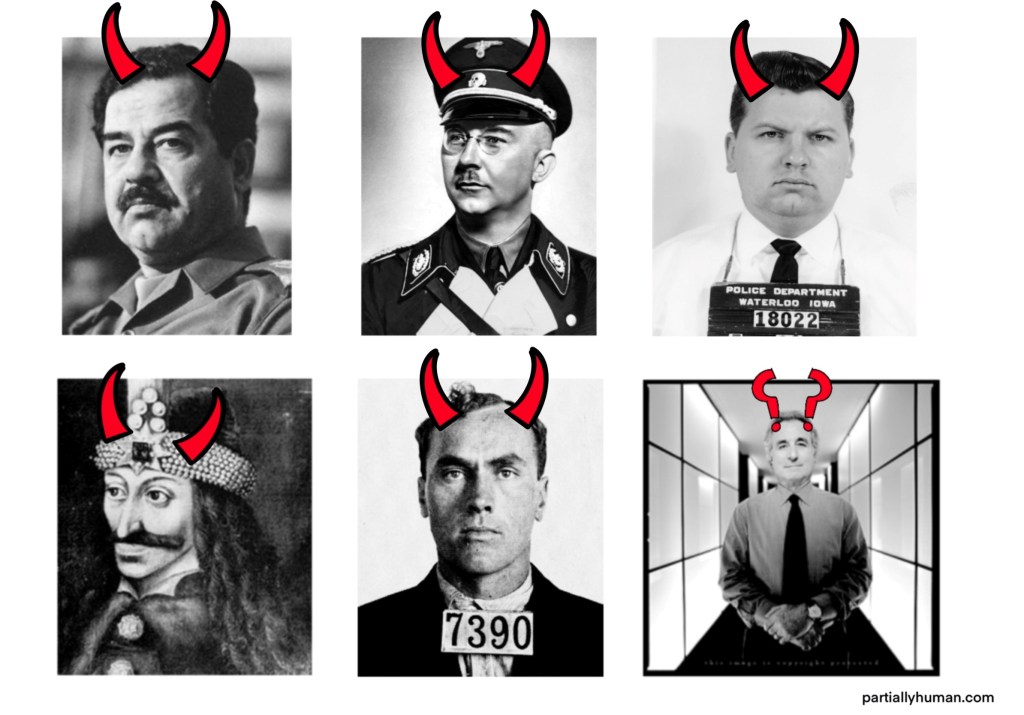
Bernie was not like those men. He had different motives.
Bernie's Motives
His Ponzi scheme started by accident. He originally just wanted to impress his father-in-law, who was a successful accountant that advised his clients to give their money to Bernie. Bernie genuinely tried his hand at investing their money, but lost most of it during a market downturn. To save face, and hide his failure from his father-in-law, he borrowed money to pay his investors back. His investors mistakenly thought Bernie was an investment wizard because he somehow didn’t lose money when the rest of the market did. Bernie liked this image of being a genius money manager. And the good PR drove more money to him to invest. And since a lot of this business continued to come from his father-in-law, he (felt) he had no choice but to take the money, despite not actually having any investing prowess. He was backed into a corner.

Bernie began the Ponzi scheme so that he wouldn’t look bad. That was his entire motive, initially. It’s important to understand this, because that’s a motive I think we can all relate to. Wanting to look good does not make you a monster, it makes you very much human. It’s also a motive that can lead people to do monstrous things.

Over time his motives evolved. He developed a taste for status. Greed sunk its claws in him. And a desire to impress people cajoled him into making a bad situation worse, using that tainted money to fund a fancy lifestyle. But Bernie did not take pleasure in hurting people. He did not want people to get hurt. He was clearly stressed out about the situation and hoping he could somehow magically keep it going without the house of cards ever falling (like Social Security—a government-backed Ponzi scheme). Even when he was buying yachts and houses with his misbegotten money, he could tell himself that he wasn’t hurting anyone, because his intention was to keep the scheme going in a way where he could continue to pay people their distributions.

Despite how big the scheme got—$65 billion—Bernie tried to keep it as small as possible. People were beating down his door to invest with him, and he would turn them down. The more clients he accepted, the more work it was to keep up the charade. But the nature of a Ponzi scheme prevents you from keeping things contained. You HAVE to keep bringing in new money in order to continue paying out distributions. So he had to keep growing it, otherwise it would all fall apart. (The kicker is that he actually had a very successful legitimate business and became plenty wealthy from that. He could have been the fancy high-status guy he always wanted to be with just that alone, but the Ponzi scheme began before he got big on Wall Street through honest means.)
And then the 2008 financial crisis happened.

This caused more money to flow out of his fund than was flowing in, and he couldn’t cover the distributions. He confessed everything to his family, who turned him in, then he confessed everything to the authorities. He seemed relieved for it finally to all be out in the open. Bernie did not intend to hurt anyone. And it’s clear he went to great lengths to protect other people at his company from culpability. As absurd as it sounds, it really was just a lie that spiraled out of control, that Bernie never corrected, because he didn’t want to look bad.
Deception for the sake of looking good runs rampant. Often it is seemingly innocuous, like photoshopping your photos for social media. (Which does cause some harm, in the form of fueling other peoples’ sense of inadequacy for being unable to live up to an artificially enhanced life.) But time and time again it causes tremendous harm. The Economist recently reported that there is a worrying amount of fraud in medical research, because researchers feel pressure to publish research with impressive results. So when their studies don’t yield anything exciting, they fudge the data. In one instance, a study with fabricated data led doctors in Europe to give cardiac patients beta-blockers before surgery to reduce heart attacks and strokes. This caused an estimated 10,000 deaths per year.
Did these medical researchers want to hurt people? No. But did they? Yes. But why? Two words: monkey motives.
Monkey Motives
Bernie Madoff did not have the motives of a monster. He had the motives of a monkey:
- Impressing other people
- Being powerful
- Being high-status
- Greed
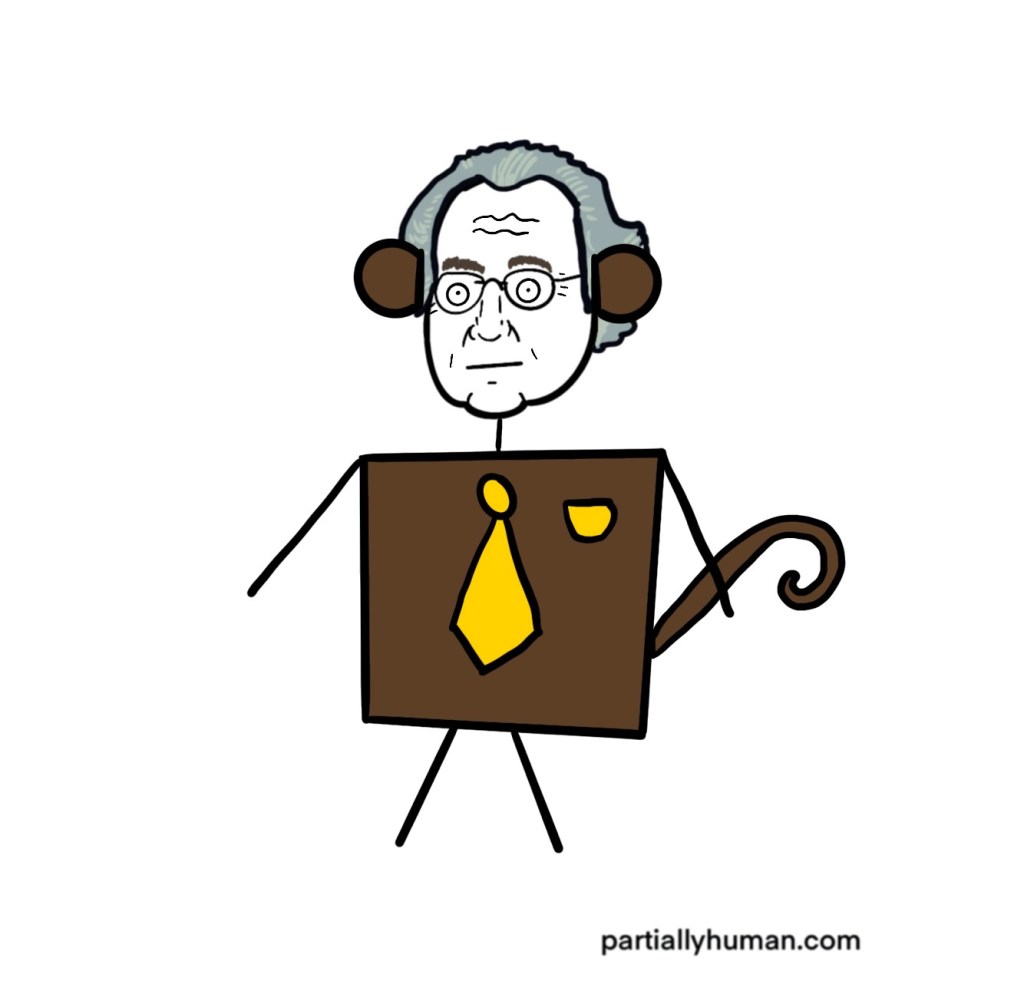
In small doses, these motives enable people to successfully navigate complex hierarchical structures. They motivate us to live up to the group’s standards, to be productive, to innovate, and to secure the resources and social relationships necessary for survival.
But left unchecked, these motives drive people to do horrific things. They are powerful desires embedded deeply in us. And understanding that Bernie gave in to demons we all wrestle with, and that he just let them get out of control to a degree that most of us don’t, is important. Motives matter, because they predict behavior. Predicting motives, and therefore behavior, helps us develop systems and norms that counteract our worst proclivities.
You can’t reform a monster. But you can tame a monkey.
Taming Monkeys
Why is the United States government structured the way it is, with checks and balances, term limits, and elections? To limit the predictable bad behavior of a bunch of monkeys in power.
Why do companies have financial auditors? To limit the predictable bad behavior of monkey executives who are tempted to misuse funds and hide financial problems.
Why are financial institutions required to keep their investment/trading activity separate from their savings and loan operation? To limit the predicable bad behavior of monkeys getting greedy and taking inappropriate risks with money that is supposed to be secure.
Why do we have generally accepted accounting principles (GAAP)? To limit the predictable bad behavior of monkey-run companies that want their balance sheet to look better than it is.
Why do we have formal procedures for creating and enforcing laws? To limit the predictable bad behavior of monkeys, in general.
A well-designed system makes our motives moot. A well-designed system hogties our monkeys. Old cash registers used to be not much more than cash drawers with calculators on them. It was insanely easy for cashiers to steal from those cash registers because they could punch in any number they wanted for the customer’s total and pocket the difference. If you are a cashier using a cash register that is tightly controlled, where every penny must be accounted for, it doesn’t matter how greedy you are—you aren’t stealing money if you know you’ll get caught. So guess what happened when stores started installing modern cash registers? Suddenly, more cash was in the register at the end of the day. Simple measures like that are enough to constrain our monkey impulses.
When someone is a monster, there is nothing we can do but lock them away from the rest of society. When someone is a monkey…well, that’s all of us, so we have to figure out how to work around our more primitive wiring. Each of us needs an environment that limits our predictable bad behavior.
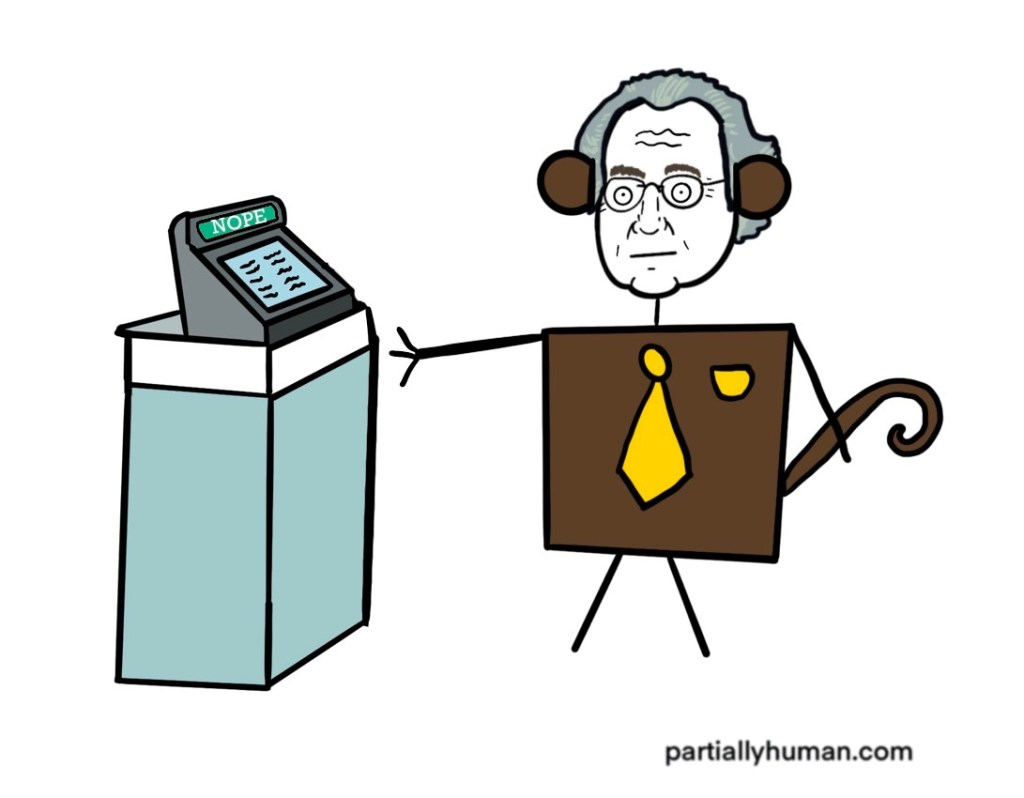
Our financial system already has rules to prevent this sort of thing. But the rules are only as good as the other monkeys enforcing them. Rules and regulations and laws are not enough to prevent bad monkey behavior. This is where culture steps in. This is where each of us plays a role either in appropriately monitoring and constraining, or condoning and encouraging bad behavior.
Seeing the Monkey in All of Us
The people surrounding Bernie did not think he was a monster, until his fraud came to light. This is a predictable reaction when people find out that someone they know did something bad.

But their shock and confusion, at the idea of him being a monster, were in fact justified, because he was not a monster. He was a monkey.
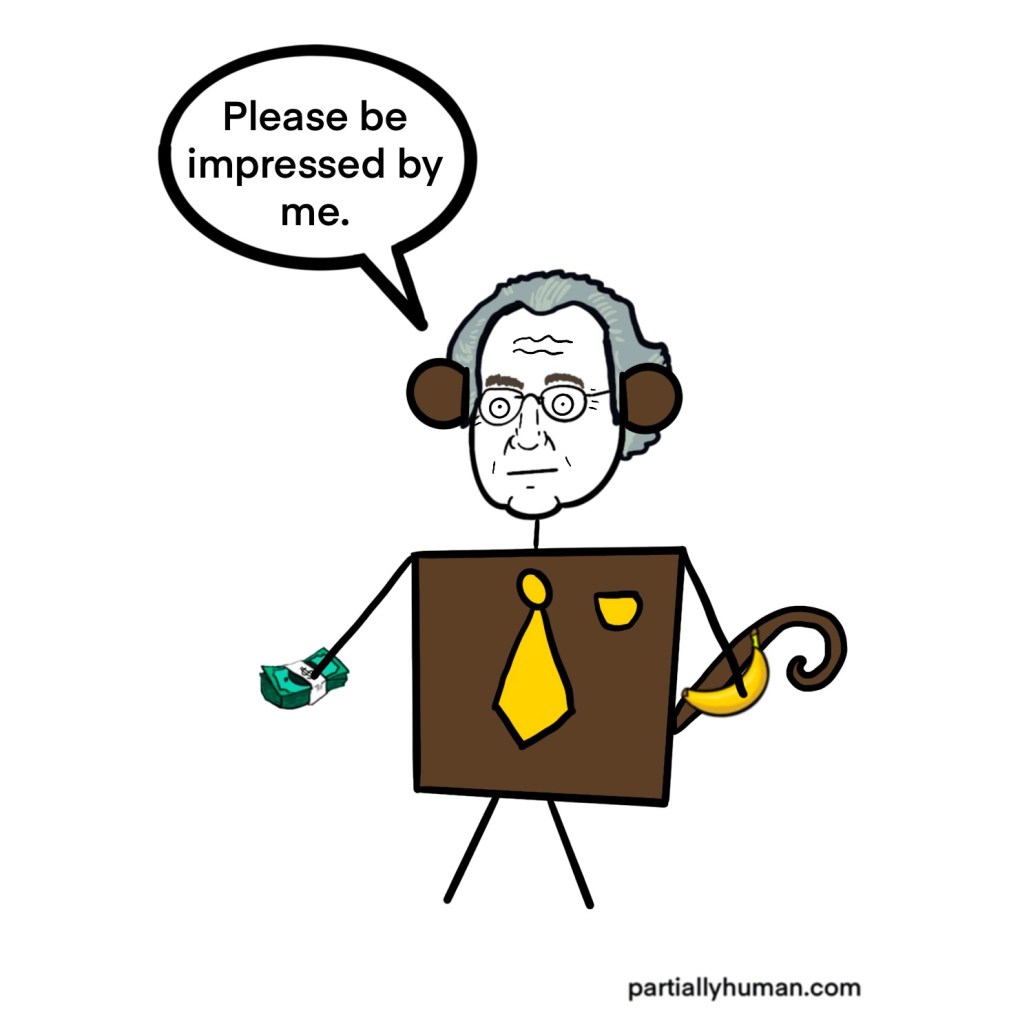
If people could look at him as a monkey, really taking in what was driving him and why he behaved the way he did, they wouldn’t be shocked or confused. They would think:

We see these monkey-driven mistakes play out time and time again: Enron, WorldCom, Tyco, Countrywide, and any pyramid scheme. And as long as we shrug our shoulders and shake our heads at people behaving badly—as if it’s a simple matter of bad people doing bad things—we allow monkey behavior to perpetuate unchecked, in both others and ourselves. It’s only in knowing that you and everyone else are monkeys that you can take measures to mitigate the worst of our tendencies. Admitting that we and others have monkey motives at times is the first step to dealing with them appropriately. People who think they have nothing but pure motives are deluding themselves because they desperately want to be a Good Person, as if life were a Disney movie. (Here’s a fun, more nuanced way to look at the question: how good a person are you? I would guess that Bernie is a Good—Bad—Good, because no one shared stories of him being cruel to them.)
I think the fear is that if we admit these less enlightened thoughts and feelings exist, then that means that is who we really are. What if having bad urges means I’m a bad person? That’s not how it works though. Just the opposite: cultivating awareness of your dark side can prevent it from leading you astray. Denying the possibility of acting with bad motives prevents us from setting up proper safeguards. It allows us to naively participate in questionable situations, comforting ourselves with our good intentions. Worst of all, it allows us to do bad things while still believing we are good, because we believe our motives were pure. This is how we create hell on earth, and then look around confused at the mess.

How do you think things might have turned out if Bernie and those around him understood that we’re all just a bunch of fancy monkeys wearing pants? What constraints would they have put in place to curtail his predictable bad behavior?
EXPERIMENT: Spotting Monkey Motives

Seeing when people are operating from their relatively more enlightened motives, rather than their monkey motives, is an important skill. This isn’t about judging people or their behavior. We are all just monkeys wearing pants. Sometimes we operate from higher values like compassion, integrity, and truth. Sometimes we are side-tracked by greed, envy, hatred, and delusion. Even the kindest, most self-aware, most emotionally intelligent people have primitive feelings pulse through their bodies and petty thoughts flit through their minds. They would have to be severely brain damaged not to.
When you get good at spotting monkey dynamics at play, it becomes comical. You’ll say, “Oh, OF COURSE this is how a bunch of fancy monkeys like us would act in this situation.” And just like that, so much shocking and confusing behavior ceases to shock or confuse you. Try it out!
PAY ATTENTION
Notice when people (including you) do things to:
- Look good
- Be better than other people
- Save face
- Deflect blame
- Be popular
- Move up hierarchies
- Gain leverage over other people
- Be admired for whatever the group deems impressive or virtuous
You might feel resistance to this exercise. It can be tricky to assess others’ motives, since they sit hidden inside their heads. And maybe we are afraid of feeling judgmental. And it can be tricky to assess our own motives, since we are tempted to reframe them as virtuous and good. And we don’t want to see evidence of unsavory desires. I think watching reality TV is a good starting point, if you are uncomfortable directing this analysis at people you know. Reality TV writers are awesome at setting up scenarios that bring out our monkeys in full force. The monkey drama on dating shows or The Real Housewives or competition shows is hard to overlook. Or, of course, you can watch Madoff: The Monster of Wall Street and see for yourself—monster or monkey?
I’m curious to hear what you think in the comments!

Comments