
Does Your To-Do List Turn You into a Butthole?
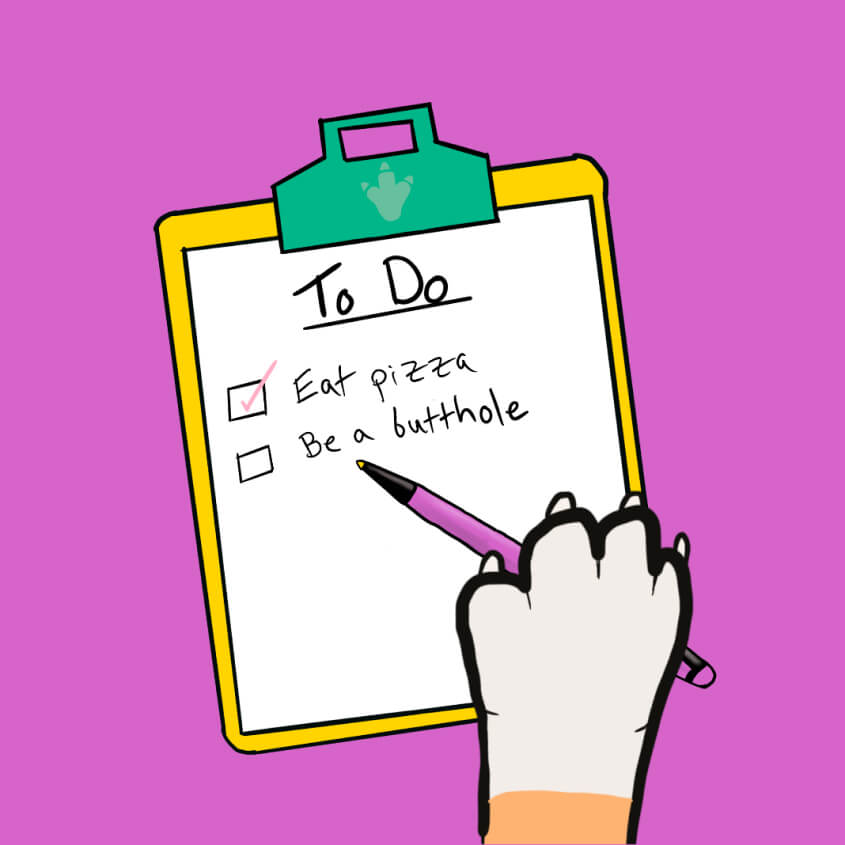
The one about how task-focused to-do lists are missing something essential
Where you focus your attention determines what gets done, and setting clear goals and priorities can (somewhat) direct that focus—no surprise here. But, when we fancy monkeys are focused on concrete tasks like cleaning dishes and chasing squirrels, we can develop tunnel vision. Our focus on completing tasks can often distract us from less tangible things that are of equal (or often, higher) importance, forgetting to smell the proverbial roses and other such nonsense that can’t be crossed off a list with the satisfying swipe of a pen.

You see this frequently when people are busy, they become impatient—seeing other people as obstacles in the way of completing their precious tasks, despite valuing and loving those people dearly. Busy people transform into buttholes, they lose sight of what’s most important in life as they are consumed with the undone things that hang over their heads. Someone focused on a long to-do list will rush through it without the lighthearted kindness, joy, gratitude, and fun-loving nature to which we (hopefully) aspire. It’s as if we can only mentally relax and be our best selves AFTER we have completed all of life’s tasks.
The Limits of To-Do Lists


The Busier the Better?
We may have the idea that our to-do list is taking us down the path to greatness (or at least satisfaction), or that busyness is a moral virtue in and of itself—a badge of honor. The assumption baked into our productivity systems is this: accomplishing these things will make us the best version of a parent, spouse, worker, friend, pet owner and citizen that we can be. Once we are on top of things, with all boxes are ticked – everything will be better. But what if the things that make someone a good human aren’t written on the list?
Busy Buttholes
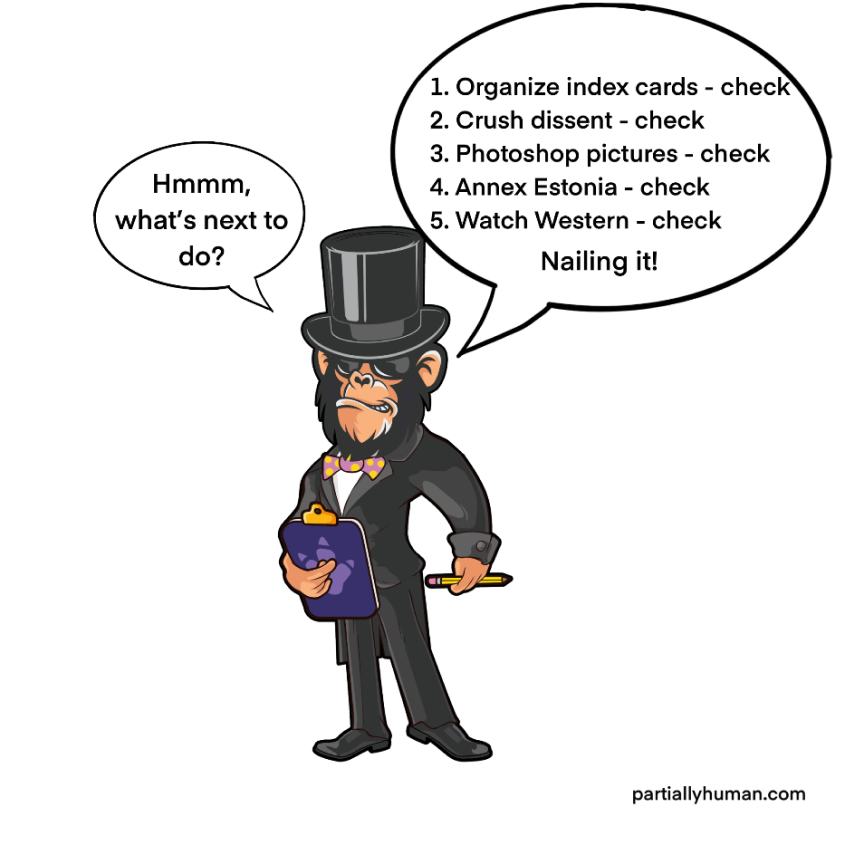
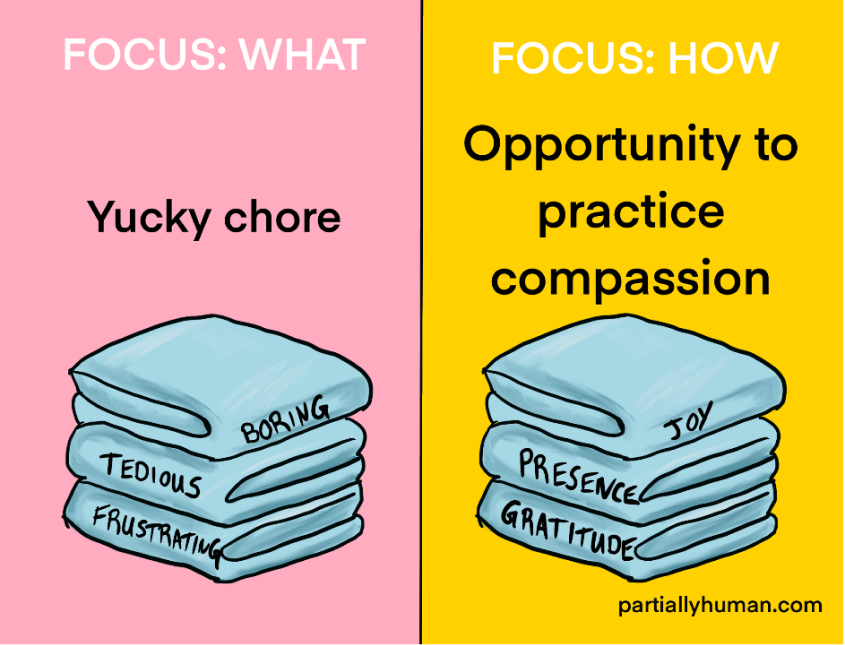
Many organizations have come to the realization that a narrow-minded focus on saddling fancy monkeys with as many tasks as possible has a fatal flaw—it turns people into buttholes! It incentivizes a cutthroat approach to achieving goals that, through a thousand tiny cuts, bleeds the internal culture of the company to death, impeding the productivity they were trying to squeeze out of people in the first place. To rectify this, most companies now have corporate values and competency models that promote good behavior alongside the traditional productivity targets; meaning individuals are assessed on not only WHAT they achieve but also HOW they achieve it, with the hope that people will get their jobs done without being buttholes.

Pulling Our Head Out of Our Butts
Balancing our goals against some basic moral and behavioral framework is a nice intention, but reflecting on our behavior during annual review season, or after someone is upset that we’ve been a butthole, is a long way from keeping that intention as a priority. Remember—where you focus your attention determines what gets done. How can you keep your attention on your aspirational values when your mind is crowded with thoughts about tasks that need doing and boxes that need checking? Think about the things that dictate your day. What directs your focus? The attention-grabbing pings, beeps, deadlines, calendar entries, emails, lists, reminders, and organization apps? At what point are you reminded to infuse humor or playfulness into your interactions with the other real-life flesh-and-blood human beings you encounter while slashing away at your task list? What encourages you to prioritize kindness and patience with others as you grind away at life’s never-ending chores.
What if instead of just having a to-DO list, you also had a to-HOW list?
Focusing on the How
Juxtapose the harried state of a busy butthole with someone who infuses their daily routines with careful attention and ritual. In Effortless: Make It Easier to Do What Matters Most, Greg McKeown writes that turning tasks into rituals—being intentional about HOW you do things—increases psychological satisfaction, making chores and work feel more meaningful and effortless. He uses the queen of rituals to demonstrate his point:
“For example, think of Marie Kondo’s approach to tidying up. She doesn’t simply invite us to get rid of the things cluttering our closets, she suggests a ritual for letting go. We are to thank the items we are discarding. We are to think about the ways in which items create joy. She writes, “The act of folding is far more than making clothes compact for storage. It is an act of caring, an expression of love and appreciation for the way these clothes support your lifestyle. Therefore, when we fold, we should put our heart into it, thanking our clothes for protecting our bodies.”
McKeown postulates that we can transform tedious tasks into experiences that create joy by focusing on the “how.” Furthermore, he proposes that we are not only happier when we invite joy into our daily routines, but we are also more effective and productive when we infuse small fragments of wonder, fun, and laughter into our seemingly mundane to-do list. Win-win! A great example of this is a story I heard meditation teacher Alexis Santos tell about when his daily chore during a meditation retreat was to fold towels. At first, he found the task to be unpleasantly dull, wondering frustratedly why people had to use so many towels. But once he decided to shift HOW he was approaching the chore, reframing it as an opportunity to practice compassion by offering a phrase of loving kindness with each towel he folded, he ended up looking forward to his daily folding ritual, even getting disappointed when there were fewer towels to fold some days.
So how do we focus on the how? Given how our brains work—limited bandwidth, memory, and attention—our wiser intentions can quickly get pushed aside by other things that feel urgent or important, making it challenging to change our routine approach. The desire to change is not enough. What we need is a simple way to continuously remind ourselves of the things that matter to us that aren’t typically tied to a deadline. We need something that clearly lays out how we want to be in specific scenarios—the best version of a fancy monkey. A way to turn seemingly insignificant tasks into rituals. We need a to-how list.
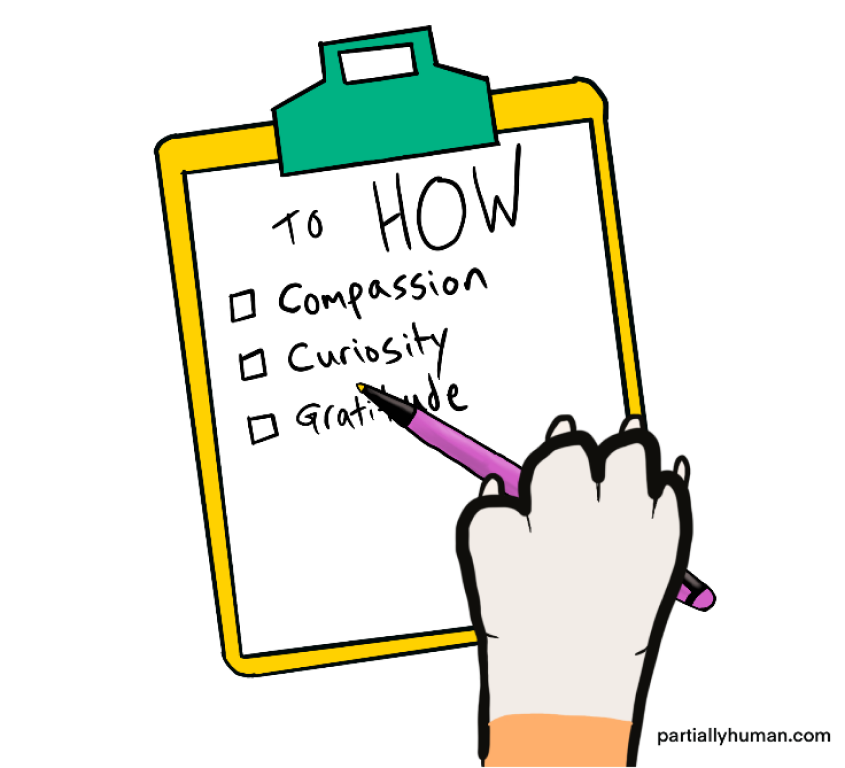
Let’s give it a try!

EXPERIMENT: Use a To-How List
This experiment will help you explore ways to incorporate your values and corresponding desired behaviors into your day-to-day activities by creating concrete ways to focus on them.
1. PAY ATTENTION TO HOW YOU SPEND YOUR TIME
Start by reflecting on how you tend to spend your time and where your attention is usually directed.
- How do you approach your to-do list?
- What things get most of your attention?
- What causes you to focus on those things?
- What are you neglecting when you are plowing through your to-do list (or even just worrying about what needs to be done)?
- What things are you slogging through without any sense of joy, curiosity, gratitude, or sense of purpose?
- How much time do you spend focused on WHAT you need to do versus HOW you want to be when you’re doing it?
- What circumstances lead to you living up to your best intentions and what circumstances cause you to lose sight of those intangible aspirations?
2. GET CURIOUS
Your to-how list is more likely to stick if it features behaviors that are aligned with your deepest values. Take a few minutes to identify a handful of “hows” you want to incorporate into your life. What matters to you? How do you want to behave throughout your day? What do you want your how-to list to focus your attention on?
Examples of Where You Could Focus Your How-To List
Below is a buttload of examples of the types of things you could focus on for your to-how list.
Virtue-Focused
Benjamin Franklin’s version of a how-to list included 13 virtues he aspired to live by (below). He writes in his autobiography that he devised the list based on a self-assessment of where his behavior tended to get sidetracked down unvirtuous roads that “natural inclination, custom or company might lead me into.”
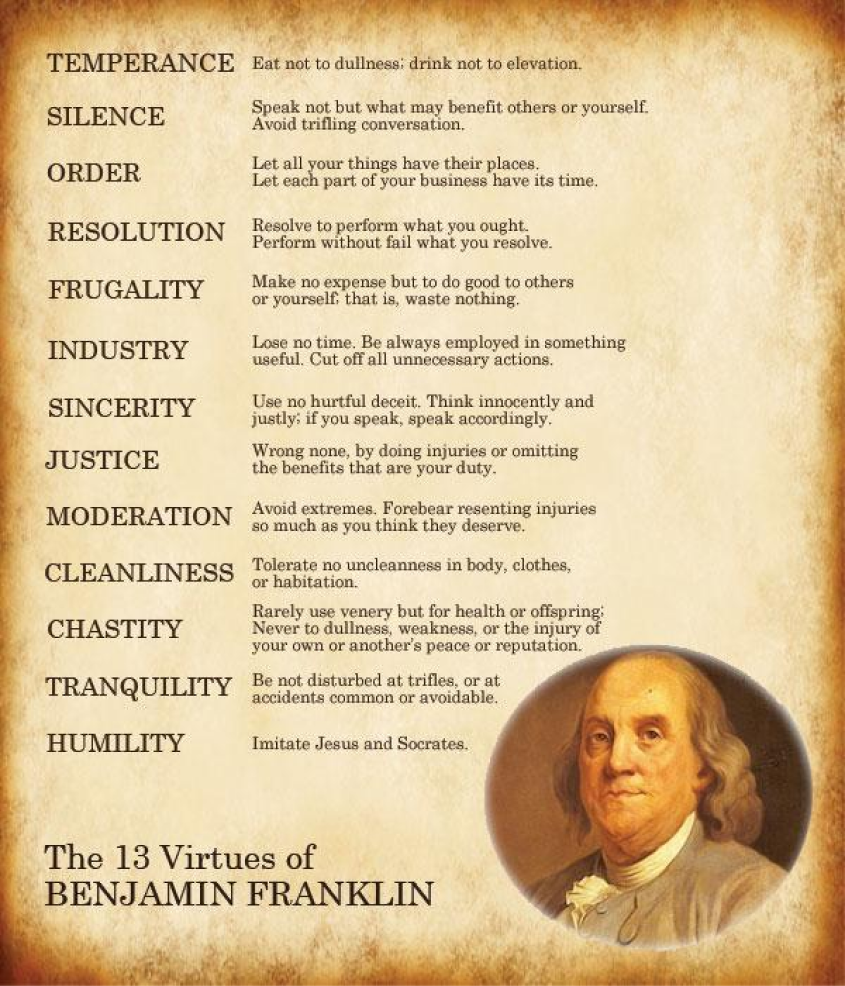
(It’s a bit funny to me that he wants to “avoid extremes” while many of his virtues are perfect examples of extremes “perform without fail, waste nothing, cut off all unnecessary actions, tolerate no uncleanliness.” But I digress.)
Human Needs-Focused
Another example of things that might be on your to-how list are human needs:
- Connection
- Security
- Honesty
- Play/leisure
- Peace
- Autonomy
- Meaning
- To matter/belong
Love-Focused
You could go the biblical route, aspiring to embody love with the famous Corinthians passage: “Love is patient, love is kind. It does not envy, it does not boast, it is not proud. It does not dishonor others, it is not self-seeking, it is not easily angered, it keeps no record of wrongs. Love does not delight in evil but rejoices with the truth. It always protects, always trusts, always hopes, always perseveres.”
Live those ubiquitous wedding vows by operationalizing patience, kindness, truth, protection, hope and minimizing envy, boastfulness, pride, dishonoring others, and self-seeking actions.
Enlightenment-Focused
Personally, I am a fan of Buddha’s handy dandy eightfold path to enlightenment as an aspirational behavior model. (Sidenote: the Buddha was an EXPERT list maker! He had literally hundreds of lists in his teachings, here is a list of his lists for when you need a little list-making inspiration.)
Right understanding – Seeing the true nature of reality, stripping away the stories, delusions, and thought patterns that leave us perpetually unsatisfied—essentially being a psychological detective of your own mind.
Right thought – Having the intention to get off the silly hedonic treadmill that flings us round and round on a tedious cycle of wanting some things and not wanting other things, instead, focusing on being a force for good.
Right speech – Being mindful of your words, pausing before you speak to ask yourself if what you are going to say is true, is kind, is necessary, and is helpful.
Right action – Act according to a moral and ethical framework.
Right livelihood – Make a living through a profession that doesn’t harm others. (I’m looking at you robocall companies. Stop annoying everyone!)
Right effort – Have a good attitude and exert the right amount of energy—not too intense and pushy, exhausting yourself, and not too slack and laid back, falling into the inertia of laziness.
Right mindfulness – Be present and aware of what is happening with your body, thoughts, emotions, and mind states.
Right concentration – The quintessential element of a well-trained mind that is clear and focused, as opposed to the untrained puppies typically causing chaos in our brains, pulling us away from awareness and equanimity.
(FYI – Getting these suckers right is hard! I have spent a lot of time working on them and continue to have my good days and my bad days.)
Values-Focused
What do you value? Figure out your top 5-10 values by perusing this values list and identify specific actions you can take to live those values throughout the day.
For example, at Partially Human our values are laid out in our manifesto:
The Partially Human Manifesto
- We hold an unflinching commitment to truth and honesty.
- We reason from first principles, enthusiastically questioning everything.
- We are curious, compassionate, kind, and playful as we pursue our goals.
- We embrace nuance, complexity, and the gray areas in our thinking.
- We laugh at our egos, not taking ourselves too seriously.
- We train our mind to pay careful attention to reality, peeling away delusions, biases, and sloppy thinking.
- We use evidence-based decision-making to design our best lives.
- We combine clear thinking, insight, and action in a never-ending process of growth, maximizing our ability to do good and live well.
Writing out your values with this level of specificity allows you to easily see whether or not your behavior matches your aspirations.
Clearly, there is no shortage of “hows” you could add to your to-how list; don’t overthink it and don’t overdo it—pick a handful that seem directionally correct and revisit other options another time. (Pro tip: choose things you actually want to do, not things you think you should do.) Please don’t spend more than 15 minutes thinking about this. If you can’t make up your mind, of all the options to choose from, I recommend finding ways to add in gratitude and kindness.
3. GET CREATIVE
The hardest part of any behavioral change is remembering to do it. Our brain fights hard against doing things in new ways, shoving us down the stairs of our best intentions—like that jealous back-up dancer in the movie Showgirls—breaking our resolve the first chance it gets. The key to successfully implementing your to-how list is to make sure it gets attention and focus the way your to-do list does.
Figure out ways to incorporate your to-how list into your life. Do you want your hows to remain on their own discrete list that you review each day? Do you want to add specific ones next to specific items on your to-do list? Are there certain days or times that would be good opportunities to do them? Can you add them to your calendar somewhere? Put reminders on your desk, fridge, door, dog, steering wheel? Set alerts, alarms, reminders? Would a checklist help? How will you keep these within focus?

Benjamin Franklin kept his virtues front-of-mind by taking one virtue at a time, working on it for a week, and then moving to the next one. He tracked his progress on a simple chart.
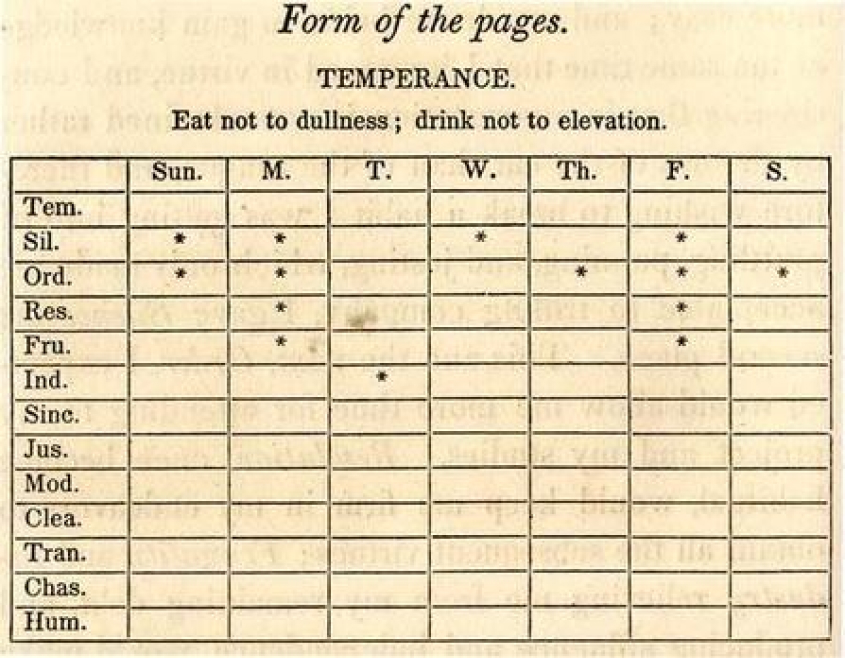
Another approach would be to change the way you format your to-do list by adding an additional column for “how.”

4. TAKE ACTION
Do it! Odds are, it will take you a few tries until you find the right approach to incorporating intentional hows into your daily to-dos. Do some trial and error until you figure out what works for you.
5. GAIN INSIGHT
Review and adjust your approach each week to assess whether your how-to list is reasonable, clear, achievable, and aligned with your deeper values and life goals, and whether your method for reminding yourself to do it is working.

After you figure out a good system that helps you remember your hows, along with approximately how many hows you can reasonably commit to at a time, you’ll naturally want to change what you focus on over time. As you get better at incorporating gratitude into your day, for example, you eventually won’t have to expend as much effort on it as it becomes a habit, freeing up bandwidth for you to take on a new how. Once you feel like you’ve found a sweet spot and are able to follow through on your hows fairly regularly (honestly, even 50% adherence is pretty good – please don’t expect 100% of yourself), then ask yourself if the how-to list is making your life better. If the answer is “yes”, keep going! If it’s “no”, scrap it and move on with your life. No biggie. Self-experimentation is about continuous learning and making decisions based on the evidence of how things work in our own lives, not based on what some blogger told us we “should” be doing to be a worthy human.
Pretty please, let us know what you learned in the comments below or in the Partially Human Facebook group.

Comments