
Beat Your Indoor Cycling PR, Without Beating Yourself Up

The one about measuring cycling success wisely.
Want to beat your Peloton personal record (PR)? This article will share techniques to help you do so. However, my hope is that by the end of this article, you won’t care too much about your PR anymore.
Today’s post is about how to improve your indoor cycling metrics without sacrificing your mental health.
The Basics of Indoor Cycling Output


Bikes with power meters, like Pelotons, measure power in watts. This measurement comes from two variables: 1) cadence (speed) and 2) torque (resistance). So if you go faster and/or heavier, you generate more power, which creates higher output.
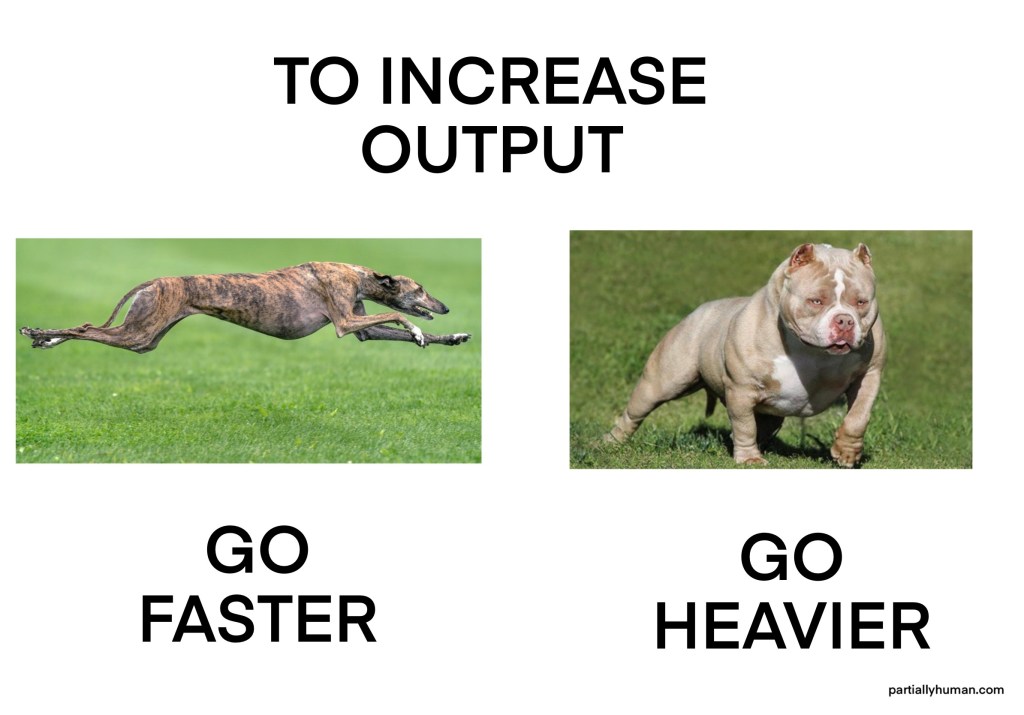
Most cyclists track progress by looking at average power or distance over a set duration. Peloton has its own special calculation, called Total Output, that’s used for your personal record. It’s calculated by taking average power and multiplying it by the length of the ride (the number of seconds in the ride divided by 1,000). So if you average 100 watts of power for 45 minutes (2,700 seconds), your total output would be 270.
The takeaway here is that to increase your PR, you need to increase your average power/watts and to do that, you need to sustain a heavier and/or faster effort. (However, later I’ll explain why you should focus on higher resistance rather than faster RPM.)
The Joys and Sorrows of Chasing PRs
Most people don’t take indoor cycling classes because they’ve always dreamed of being able to average 250 watts of power for 30 minutes. So why do we sit on a stationary bike, huffing and puffing and grunting as we pedal to nowhere? For most of us, it’s usually some combination of abstract “be healthier” goals, a desire for our body to look a certain way, and the elation we feel when doing cardio. But something strange happens when you have those bike metrics floating in front of your face throughout class—you start caring about those numbers.
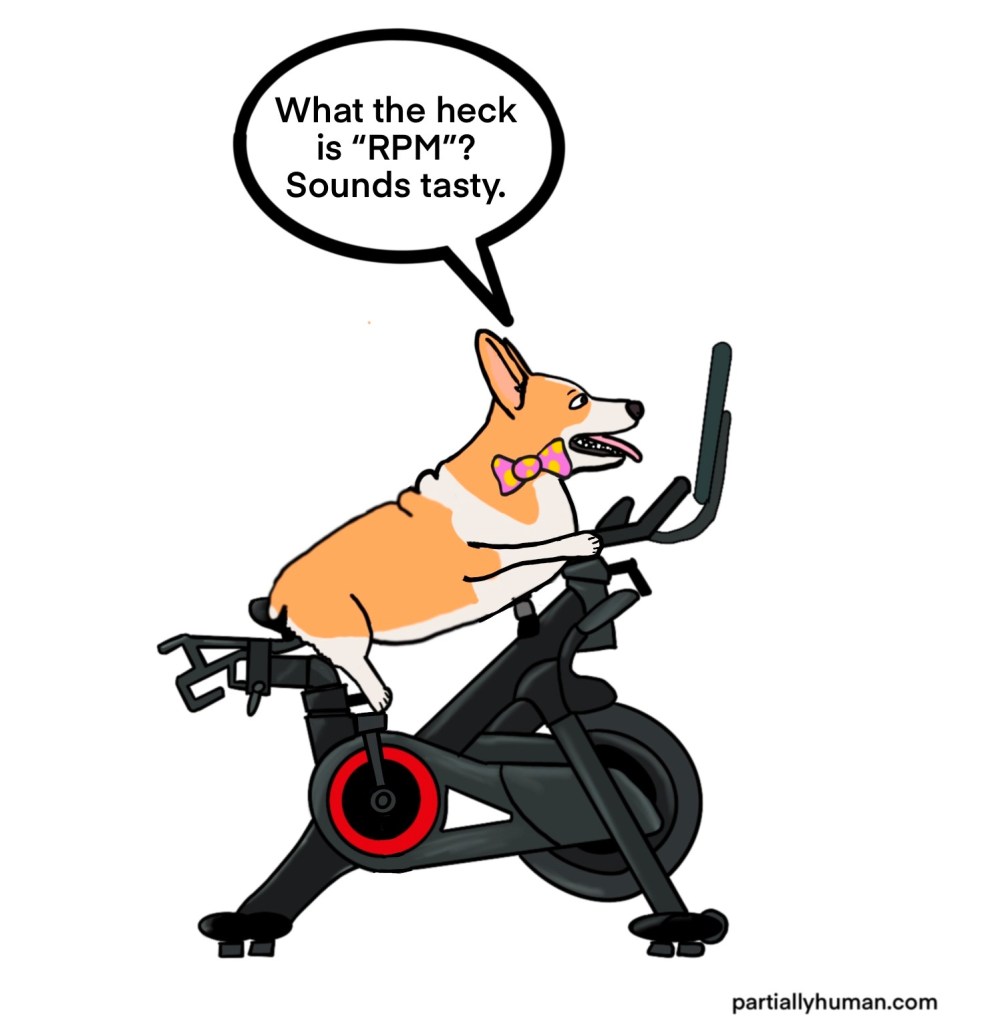
Initially, you wonder what the numbers mean. Eventually, you wonder what they mean about YOU. Are you fast? Slow? Strong? Weak? How do you measure up? One of the top questions my cycle class participants ask me is, “What’s a good power number?”

Maybe, eventually, you learn benchmarks that tell you where you stack up. Ideally, you just learn your own baseline and compare yourself to yourself over time.
Naturally, your metrics improve over time as your fitness increases. And that feels good. DAMN GOOD.
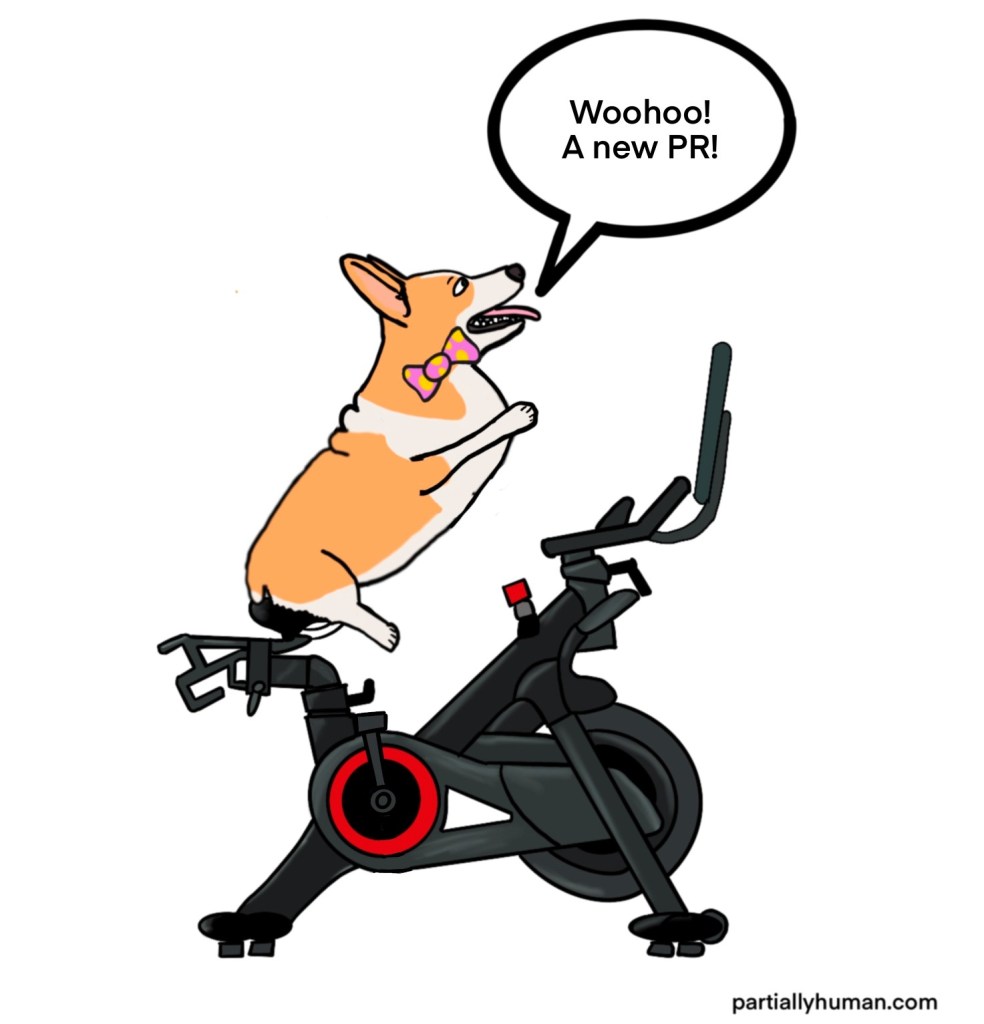
If you’re new to exercise, you will get many months, if not years, to enjoy the pleasure of noticeable fitness improvements. Anyone who starts running, lifting, cycling, yoga, etc. will see monthly or even weekly gains. It’s quite exciting. (As long as you are only comparing yourself to yourself. If you start exercising and immediately compare yourself to people who have been working out for years, then you will reliably feel deficient.)
But as you get fitter, your returns diminish. Progress starts being measured in inches rather than miles. Where at first you were adding 20-30 to your PR every week, now you’re lucky to add 1-2. Eventually, you struggle to meet PRs you’d set previously.
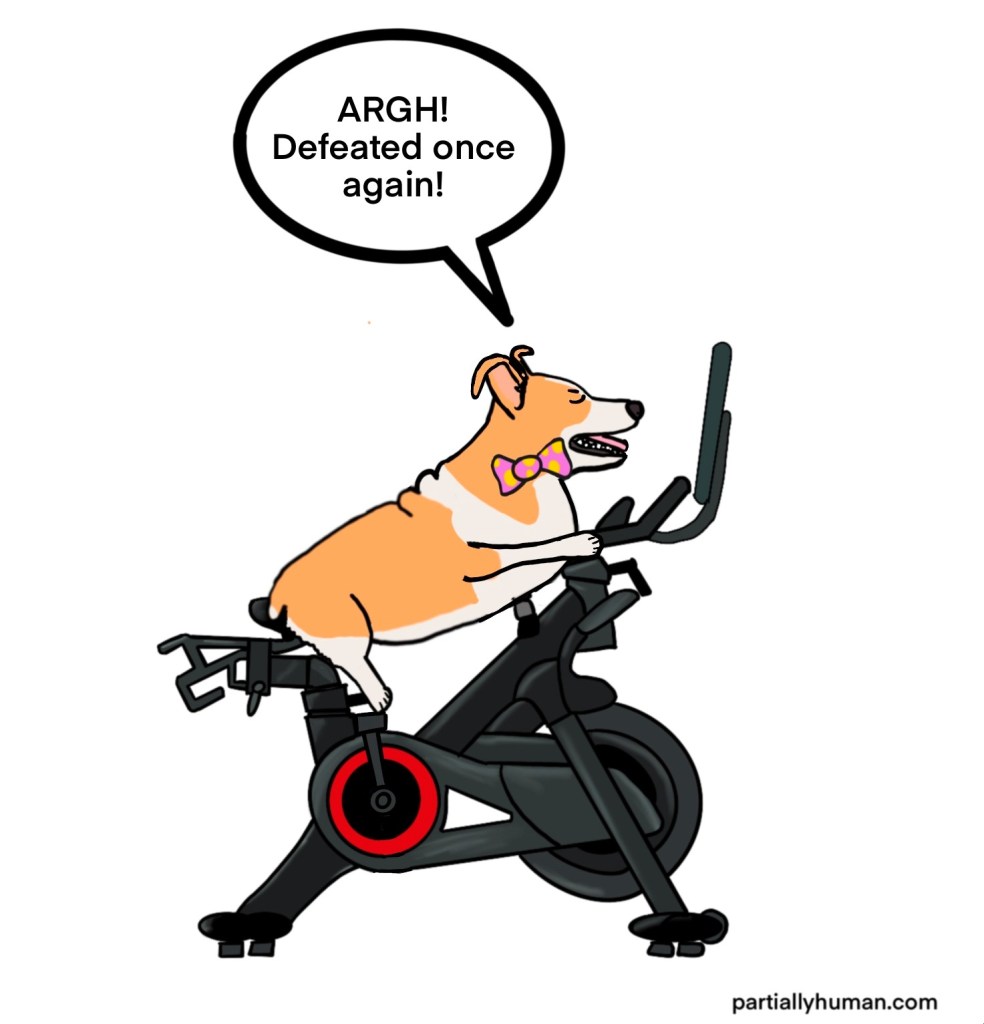
And this is a fascinating place to reach in one’s fitness journey, because… guess what? You’ve made it! You’re fit! That’s awesome, right? The place at which improvements level off is usually after you’ve achieved a decent fitness level. But many people find themselves getting frustrated when they reach this glorious place because they got hooked on the pleasure of making progress. And now they aren’t getting those same hits of excitement. Achieving your goals can feel surprisingly underwhelming. (Relatedly, I’ve seen dozens of interviews with Olympians who report feeling empty after winning their medal. They work so hard for something, they get it, and they’re disappointed to wake up the next day and still feel the way they always have. Lesson: physical achievements are not the secret to happiness.)
I was so excited the first time I ran a mile in under 10 minutes when I started exercising in my mid-20s. Fast forward 6 months, I experienced many weeks of frustration trying to get my mile under 8 minutes. Despite being fitter, I was less happy with my workout. We fancy monkeys move the goalpost of success, ensuring happiness is fleeting and disconnected from objective reality.
As it gets harder and harder to beat your PR, many people feel discouraged. It can feel like you are putting a disproportionate amount of effort into something that isn’t paying off. (Interestingly, some people experience this immediately. They ride their Peloton for TWO WEEKS and get upset about not seeing progress. If this is you, then just realize your body is still adjusting and probably pretty sore. Give it a bit more time—you haven’t peaked yet, my friend. Reasonable expectations are important.)
Getting frustrated at this point in your fitness journey is kind of bananas. You started working out, you made a bunch of progress, and you’re probably pretty fit, but now you’re getting frustrated? Is there a problem with you? With your workout? No, and no. The problem is with our relationship to metrics.
The Problem with Metrics
When I was in 4th grade, we took these timed quizzes where you had 60 seconds to answer as many multiplication questions as possible. I would be trembling after these quizzes because I was so hopped up on adrenaline from the stress of willing my mind and pen to move at the edge of human capability.

The teacher would then ask for a raise of hands to see who got more than 10 completed correctly, then 20, then 30, and on she would go eliminating people until she saw who got the most.

It always came down to me and a boy named Brett. I was obsessed with beating him.

He usually won.

The handful of times I beat him left me flying high the rest of the day. Most of the time he just beat me by 1 or 2, leaving me stewing in the defeat.
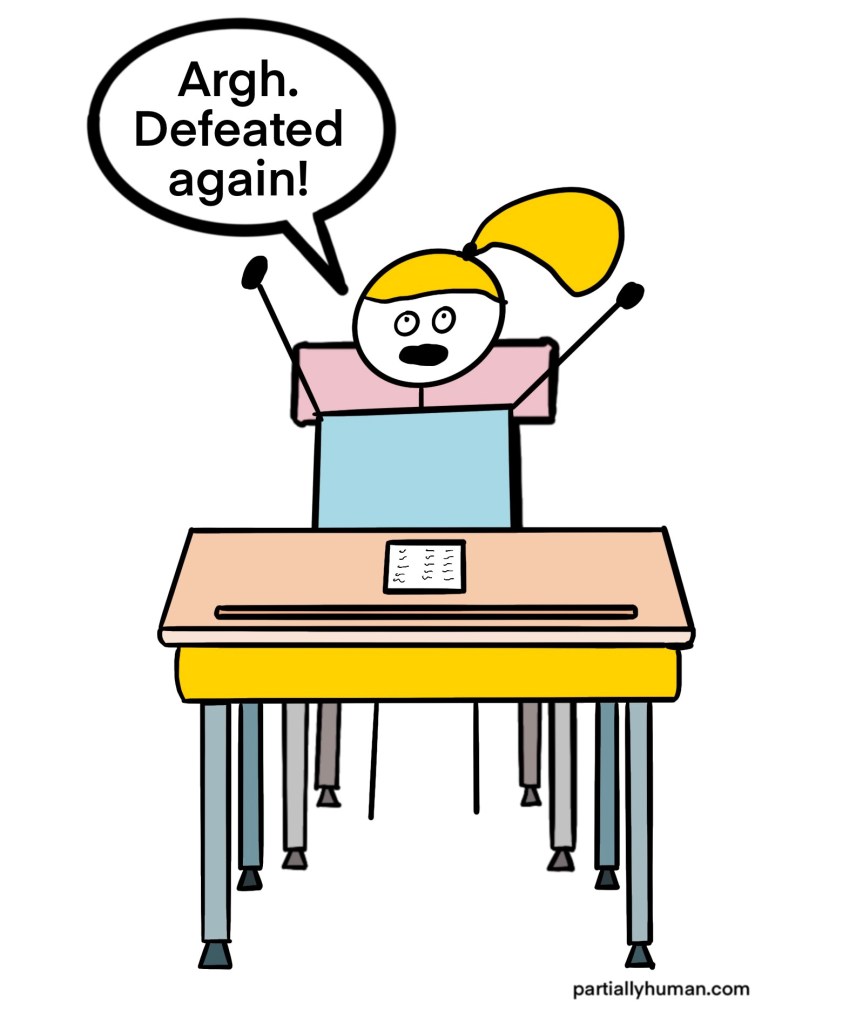
It all felt so important. Practically life-or-death. In a way, it was. Demonstrating competence and winning competitions raises your status. For monkeys like us, status equates to your ability to get your hands on the best resources; being higher status allows you to land a better mate, a more lucrative job, and increased social support. The bounty afforded to you as a “high status” monkey promises to keep you safe, happy, well-fed, and well-liked—all the things we strive for. As shallow, egotistical, narcissistic, and degrading toward others the pursuit of status is in modern society—it’s not irrational. The desire for status is fundamentally about the need for safety, security, and acceptance—all unquestionably important things. This primitive instinct is deeply embedded in our psyche and drives our behavior in both obvious and subtle ways. And that’s how my monkey brain twisted a timed multiplication quiz that I was objectively pretty good at into a daily drama-filled heartbreak. (By the way, the quizzes weren’t even graded.)
How should I have classified my performance on those quizzes? Nothing but defeat, except for the few times I won? Should I have compared how many correct answers I got later in the year versus earlier? Should I have looked at my score compared to all 4th graders in my country? Or against the 20 kids who did worse? What constituted success?
Beating a metric is pleasurable. This is dangerous because we want to repeat pleasurable experiences. This drive breeds addiction. Then, one day we find ourselves doing what we’re doing simply to relieve the discomfort that builds up because you need to get that hit of pleasure again. It becomes a compulsion disconnected from our original intentions. It makes us lose sight of what matters.
I probably don’t need to tell you that it doesn’t matter how many multiplication problems you can complete in 60 seconds. This is not an important life skill. What does matter is that you understand multiplication well enough to do things like triple a cookie recipe, calculate the price of 4 tickets to see Mike Tyson, or report how much stuff you accomplished to your boss. (Even if you have a math-heavy job like engineering or architecture, you aren’t sitting there blasting out times tables; they use computers.) But it’s easy for us to get caught expending needless energy on things that don’t matter—like how fast you are on a bike or at multiplication—losing sight of what does matter in the process. That’s the danger of getting fixated on specific metrics that don’t directly track what’s important.
Business experts know that metrics are a powerful tool that shapes our behavior because they incentivize us to try to measure up. In the paper, Dysfunctional Consequences of Performance Measurements, the author V. F. Ridgway writes:
“What gets measured gets managed—even when it’s pointless to measure and manage it, and even if it harms the purpose of the organization to do so.”
When a business or person focuses myopically on making money or beating competitors, it doesn’t take long for integrity, kindness, compassion, and common sense to fall by the wayside. When an exerciser focuses myopically on beating their PR, other much more important things—family, positively contributing to the community, and even their health—can end up taking a backseat. We all have finite energy, and one of our most important tasks in life is to make sure that energy is directed toward meaningful things that align with our values. Our energy should be directed at things that matter.
If you are a professional cyclist, then your power output matters. If you are some other type of professional athlete, then you’re cycling output matters indirectly, insofar as it correlates with your VO2 max and strength. If you do not get paid to perform athletic feats for a living, your cycling output does not matter.
What do Gandhi, Mother Teresa, Martin Luther King Jr., Helen Keller, and Stephen Hawking have in common? None of them ever took an indoor cycling class. And yet, they still managed to live pretty good lives. (And also, I think I could beat them on a Peloton. Lol.)
So what matters? Loved ones, a sense of purpose, personal development, living in alignment with our values, health, and [insert other stuff that is important to you here].
We work out to be healthy and feel good. Is your PR a measure of health? No. So let’s look at what is.
Measuring Health
To measure health, we must define what it means to be healthy. I like Precision Nutrition’s Deep Health Model. Here are the 6 dimensions:
- Social: Having a sense of connection and belonging to the people in your life
- Physical: Feeling energetic; your body performs and functions well
- Emotional: Being able to tune into, process, and express your feelings and emotions
- Mental: Being able to think clearly, focus, and remember important stuff
- Environmental: Living amidst surroundings that feel safe and supportive
- Existential: Having an underlying sense of gratitude, purpose, and joy
Exercise contributes to the physical health domain (and maybe some of the others, depending on what you do). And if physical health means feeling energetic and your body performing and functioning well, how do we measure that? (Spoiler alert: You don’t need to have a six-pack.)
Are You Psychically Healthy?
- Do you get sick often?
- Do you have a chronic illness or the early signs of disease?
- Do you have the energy to do the things you want to do?
- Can you physically perform the activities you enjoy, like gardening, traveling, playing with kids, or riding roller coasters?
- Do you have sufficient cardio endurance, muscle mass, balance, and agility so that as your body starts to decline in your older years you’ll still be able to manage daily activities? (Meaning, is it easy for you to carry a suitcase upstairs, lift a box over your head, walk a few miles, and bring groceries in, as someone under 50? Because muscle mass will decrease significantly over the subsequent decades, so you need to be able to do about twice as much as necessary before that decline begins.)
Most of this data is squishy and lives on a continuum, which makes it frustrating. Simple, easily measurable metrics—like bodyweight and PRs—are so much more satisfying, even if they don’t measure what matters. But there are more concrete metrics you can use to assess health.
Looking specifically at physical health, you’ve achieved decent cardio fitness—the goal of indoor cycling—when:
- Your resting heart rate is around 60 bpm
- You can run a mile in 7-8 minutes (depending on age and gender)
- You have a good VO2 max
- You have high heart rate variability
Nothing fancy or dramatic is required to achieve these things—30 minutes per day of moderate exercise will get you there. And guess what? You can achieve these things with a relatively unimpressive PR. And you will achieve these things LOOOOONG before you get to the top of the Peloton Leaderboard; people at the top of the Leaderboard are generating power on par with elite athletes. For reference, Tour de France cyclists can average 220-320 watts for FOUR HOURS! And, during really intense portions, some can average 500 watts for AN HOUR! That is insane. (For context, I’ve been cycling for 10 years and can just barely average 200 watts for 45 minutes, exerting a disgusting amount of effort. And I can hit a max of 475 watts for about 1 second.) Some people at the top of the Leaderboard are potentially working at a level that undermines their health, as excessive amounts of cardio (we’re talking several hours per day of vigorous effort) leads to heart problems.
Looking back at the 6 dimensions of deep health—social, physical, emotional, mental, environmental, existential—think about how exercise fits into that for you. Are you treating fitness like a yummy side dish that enhances a well-rounded life? Or has it taken on an inflated sense of importance? Or worse, does it undermine your mental or emotional health because you are upset about your progress? It’s easy to become obsessive about metrics like PR, streaks, blue dots (Peloton’s version of streaks), calories burned, and whatever is easy to track. Author David Sedaris is famously obsessive about his Apple Watch steps to a degree that I think most of us would say is unhealthy: “If I were to be crossing the street and I looked up and I saw a car speeding toward me, my first thought would be ‘my watch’.” It’s ironic how a quest to be healthy can turn unhealthy. Something to keep an eye on if you are prone to perfectionism.
If, despite everything you’ve read so far, you still think it would be fun to beat your PR, then keep reading!
How to Increase Your PR
Sometimes you just want to beat that number. Fair enough! As long as you realize that these small victories will only provide fleeting excitement, rather than a meaningful, long-lasting sense of accomplishment, then you’re good to go.
The below suggestions are common things indoor cyclers could improve, based on my 7+ years teaching classes. Not all of these will apply to everyone, so just zero in on the things relevant to you. And just know that, eventually, each new PR will require more prep and all you’ll have at your disposal are minor tweaks—so don’t discount the impact some of these small things might have on pushing you over to that next record.
Make Sure Your Bike is Set Up Properly
If your seat is too low (the most common mistake), you won’t be able to pedal efficiently. Your leg should only have a slight bend in the knee (to about a 25-30-degree angle) when your foot is all the way at the bottom of the pedal stroke. And when your foot is at the front of the pedal stroke, your knee should line up with the ball of your foot. If your seat is too low or too far back, you won’t be able to engage the back of the leg as much. (Here are detailed instructions with photos.)
Spend 2-3 Days Properly Hydrating
Dehydration has a dramatic impact on sports performance. Drink plenty of water and skip the alcohol and ultra-processed foods for a few days before trying to beat your PR. Also, make sure to get adequate electrolytes like sodium and potassium by eating nutrient-dense foods and adding an electrolyte powder to your water.
Skip Working Out Your Legs for 2 Days (or More!) Before Your Attempt
Giving your legs a few days off allows them to fully recover so they’ll be able to perform at their best. (My last 3 PRs happened after coming back from vacation.) Don’t take more than a week or two off though because cardio fitness starts dropping after a couple of weeks.
Eat Enough
It’s kind of funny how many people like to jump into a workout routine at the same time as they go on a calorie-restricting diet. I understand the logic, but the diet is counterproductive to muscle-building. True, working out can prevent muscle loss while dieting, but don’t expect to put on a bunch of new muscle while in a calorie deficit. And don’t expect big PR gains either. A calorie deficit is rough on the body.
You’re much more likely to PR when eating at or above maintenance calories. If you’ve been dieting for a long time, it may even take a few weeks of eating at maintenance calories for your body to fully shift into high-performance mode.
And carb-loading is not a myth—eating enough carbohydrates to fully replenish the glycogen stored in your muscles makes a HUGE difference in being able to generate maximum power output. Eat a hearty serving of complex carbs the night before and a small serving of easily digestible carbs, like fruit or toast, 30-60 minutes before your ride.
And you need to eat enough calories and protein to repair your muscles after a workout if you want to see gains. This is a huge reason people don’t see much improvement over time.
Sleep
If you’re well-rested, you can eke out some extra performance. Go to bed at a decent time after a relaxing evening routine (sans drugs and alcohol) and sleep in.
Get Enough Oxygen
There are breathing techniques you can do to front-load extra oxygen before the ride and make the most of recoveries during the ride. For 2-3 minutes before you start riding, lay on your back and breathe in as fully and deeply as you can, feeling your lungs expand and your belly rise and fall, essentially forcing as much air in as possible over and over. The exhales can be shorter and quicker than the inhales. What’s important is lots of big inhales to force oxygen in; this might make you lightheaded.
During the ride, breathe using your diaphragm—your belly should be rising and falling every time you breathe (as opposed to chest-breathing). You don’t want to be running out of air until the last few minutes of the ride.
During recoveries, force air into your lungs with lots of big deep inhales.
Toward the end of the ride, just go for it, and don’t worry about how winded you get. Most people would be surprised how much work they still have left in them even when they feel like they’re running out of air. I like to jokingly tell my cycle classes that you can cut off oxygen to the brain for 6 minutes before you start to get brain damage, so you’re fine.
Warm Up
Do 10-20 minutes of warming up before starting the ride, something like a 10-minute bodyweight workout or Barre class, and then a 5-10 minute warm-up ride. If you don’t normally warm up, this will make a BIG difference because now you can just dive right into the ride from the second the timer starts. Skip the low resistance the instructor calls out and go straight into higher output.
Activate Your Glutes and Hamstrings
Do some exercises that activate your posterior chain, like deadlifts and glute bridges, so that you already have good blood flow to those areas when you start the ride. Most people overuse their quads when cycling, so anything that helps you use more of the back of your leg will help you generate more power output.
Powerful Pedal Strokes
This is probably the number 1 thing most new indoor cycle participants need help with. The tendency for many is to push push push the pedals with the quads. And when standing, many people look like they are on an elliptical stepping down down down with their bodies upright. What’s happening here? You’re not using all the muscles in the lower body to power around the entire 360 degrees of the pedal stroke. And instead of using those big powerful glutes and hamstrings, you’re using the comparatively puny quads to do all the work. This is both exhausting and inefficient and will leave you feeling like you’re working super hard only to produce a very unimpressive power output number.
It takes many months of intentional practice to lock down good technique, but the bang for your buck is more than worth the effort of focusing on this for a while!
Here’s how to pedal:
- Kick forward, pushing through your heel (not your toes!) – when you push through the toes, you are using the quad, if you drop your heel slightly and imagine you are pushing through the whole foot the way you would while squatting, then you can activate the back of the leg more (it’s easier to do this wearing cycling shoes because they have a stiff sole, so you can generate power using the whole foot)
- Kick backward like you are scraping gum off your shoe, using the back of the leg (again, cycling shoes are important here, because since you are clipped in you don’t have to worry about pulling your foot out of the toe cage)
- Power up and over with the hip, it helps to think of driving your knees up (you can even recruit your lower abs and obliques) and you drive over the top of the pedal stroke (like you would in a high-knee run)
- As one foot is kicking in one direction, the other foot is exerting force in the other direction (as opposed to just one foot pushing at a time)
When standing up, it becomes very obvious if someone is just putting all the work in the frontward motion because they can’t climb quickly and they are clearly just stepping down over and over. In order to recruit all the leg muscles while standing:
- Have your butt hovering back over the tip of the saddle and your body tipped forward (it is harder to recruit the posterior chain if you are standing upright)
- Tip your body forward with your hands at the top of the handlebars, but NOT leaning on the handlebars – your weight is back in your legs and your upper body is just coming along for the ride
- Move your body side-to-side in sync with whichever foot is pushing down, so as your right foot pushes down you have your entire body centered over that foot so that your bodyweight helps you push down forcefully, and as your left foot goes down your body has traveled over on top of it
- As one foot goes down, take note of what’s happening to the other foot. Is it hanging out, waiting for its turn to go down? No! It is working that backwards stroke. It’s using that posterior chain to drive the knee up. It is still working. Both feet are always exerting force!
- Always keep your shoulders in line with your hips, meaning that your butt isn’t wagging side-to-side as your shoulders stay in one spot. If your shoulders stay in the same place as your back half moves side-to-side, then you can’t place the full weight of your body on top of each pedal stroke as you press down.
If you only take one tip from this article, make it this one! Use every muscle fiber below the belly button! No more push push push or down down down. Kick forward, scrape back, power around the top. Drive the knees up up up.
Stand-Up During Recoveries
Instead of reducing your resistance to 30, or whatever the instructor says, keep it a bit higher and stand up and walk. Treat it like a light climb. This will keep your average power higher and you will continue to increase your output while still recovering. And whatever you do: DO NOT STOP PEDALING. Ever! Stopping wrecks your average power and total output. Worst case scenario, reduce to a very light resistance and pedal at 50-70 rpm.
Ignore the Instructor
The idea of someone just doing what they want in the ride instead of what the instructor tells them makes many people grumpy. In the Peloton Facebook group, people snidely remark on other riders who “clearly are not following the instructor’s cues” as if rogue riders are 4Chan trolls with zero decency, selfishly riding their Pelotons that way just to one-up everyone. It takes very little thought to realize that it is silly to denigrate people who choose to use more resistance than called for. Should professional cyclists dumb down their workouts because it’s unfair to the rest of us that they can do so much more? Or should they work in a range dramatically below the level that challenges them because Cody Rigsby told them to? Of course not! I’m not an elite athlete, but several instructors regularly call out cadences and resistances that are too easy for me, so I modify the workout to my goals and abilities. Tailoring the workout to your needs is smart. You’re only being rude if you’re being distracting at an in-person class.
You can’t rely on what the instructor planned that day to help you beat your PR. Some instructors program in a bunch of recoveries that would be too much wasted time if you’re trying to go big. Some instructors never call out high enough resistance for advanced riders. And there comes a point where the only way to beat your PR is to work through the recoveries and skip the warm-up.
If you’re able to, these are the ways to modify the ride to beat your PR:
- Skip the warm-up and dive right into higher resistance
- Shorten the recoveries, and toward the end of class (last 5-10 min) skip recoveries all together
- Spend more time standing up
- Stand up and walk or do a light climb during recoveries
- Spend more time pushing high resistance rather than fast cadence, ideally keeping your cadence below 90 (most people are able to generate more power for longer at lower cadences)
- Keep working through the cooldown
Cross-Train
The big focus for cyclists should be strengthening the posterior chain, particularly the glutes and hamstrings, because cycling is naturally so quad-heavy, which can lead to muscle imbalances. So think squats, deadlifts, hip thrusts, glute bridges.
Core strength is also important because it stabilizes your body and helps you drive your knees up. So think planks, hollow holds, scissor kicks, bicycle crunches.
And the posture muscles in the upper back matter too. So think reverse flies, rowing, supermans (laying face down on your stomach and lifting your arms, torso, and legs up).
Get Fitter
I know this is obvious, but it’s still worth pointing out. Your PR will increase as you generally get fitter, which means regularly working out and increasing your strength and endurance. You do this by putting on more lean muscle mass, which entails progressively overloading the muscle regularly alongside eating enough calories and protein, and by consistently doing cardio at a variety of intensities. This takes time, but it’s also likely the reason you are working out to begin with, so it’s the most important tip to follow.
And, as I mentioned earlier, there comes a point where you are decently fit, and it’s difficult to get fitter as a normal person with limited time and resources to focus on fitness. It also becomes a waste of time and energy to push further because there is no real value in being fit beyond a certain level. So once you’ve plateaued… celebrate! You’re fit! Woohoo!
Conclusion
Fitness is a means to an end. It keeps your body in good enough working order to do other, more important things. It is but one dimension of health, and a mere fraction of what makes up a life well lived. While your cycling PR is insignificant in the grand scheme of things, it can be a fun metric to track. So if you’re still inclined to chase that new PR, I wish you all the best! (And if you are instead inclined to practice your multiplication tables in hopes of beating me in a math race, then: challenge accepted.)
EXPERIMENT: Beat Your PR, Without Beating Yourself Up
Try out the different tips and techniques in this post to improve your PR, while also keeping a healthy dose of perspective about the endeavor.
- Make Sure Your Bike is Set Up Properly
- Spend 2-3 Days Properly Hydrating
- Skip Working Out Your Legs for 2 Days (or More!) Before Your Attempt
- Eat Enough
- Sleep
- Get Enough Oxygen
- Warm Up
- Activate Your Glutes and Hamstrings
- Powerful Pedal Strokes
- Stand-Up During Recoveries
- Ignore the Instructor
- Skip the warm-up and dive right into higher resistance
- Shorten the recoveries, and toward the end of class (last 5-10 min) skip recoveries all together
- Spend more time standing up
- Stand up and walk or do a light climb during recoveries
- Spend more time pushing high resistance rather than fast cadence, ideally keeping your cadence below 90 (most people are able to generate more power for longer at lower cadences)
- Keep working through the cooldown
- Cross-Train
- Get Fitter
Pick 1-2 things to play with and see if they make a difference. As your PR gets higher and higher, you’ll have to be more intentional in your preparations in order to beat it. Eventually, you’ll plateau and that’s okay.
More importantly, maintain awareness that your PR doesn’t really matter; it doesn’t define you; it’s just a silly metric invented by fancy monkeys.

Wonderful goods from you, man. I’ve understand your stuff previous to and you’re just too fantastic. I really like what you’ve acquired here, really like what you’re saying and the way in which you say it. You make it entertaining and you still take care of to keep it smart. I can’t wait to read much more from you. This is actually a tremendous site.
Greetings! Very helpful advice within this post! It’s the little changes that will make the largest changes.
Thanks for sharing!